English
 Views: 0 Author: Site Editor Publish Time: 2026-03-05 Origin: Site


Cardboard tube packaging has become one of the most versatile and sustainable options for brands across food, cosmetics, gifting, and shipping. Strong, customizable, and recyclable, the paper tube has quietly become a packaging staple—and for good reason.
But how exactly is cardboard tube packaging made? And what should you know before ordering custom paper tubes for your products? This guide covers everything: from the basic construction process to choosing the right tube for your needs.
A cardboard tube—also called a paper tube or paper cylinder—is a hollow cylindrical container made from layers of wound paper or kraft board. The result is a lightweight but surprisingly sturdy structure that can hold anything from tea and cosmetics to posters and perfume bottles.
Unlike flat-pack boxes, cardboard tubes offer 360-degree protection without sharp corners that can buckle or collapse under pressure. Their shape also lends itself to eye-catching branding, since the entire outer surface becomes a canvas for printing.
Before getting into the manufacturing steps, it helps to understand what goes into a paper tube. Most cardboard tube packaging is made from three key components:
Kraft paper or recycled paperboard: This forms the structural layers of the tube wall. Multiple layers are wound together to achieve the desired thickness and strength.
Adhesive: A water-based or food-safe glue bonds each layer during the winding process. For food-grade applications, the adhesive must meet specific safety standards.
Finishing materials: The outer layer is often wrapped with printed paper, foil, or specialty materials to give the tube its final appearance.
Reputable manufacturers like Hallpack use FSC-certified, eco-friendly materials throughout production—ensuring the final product is both high-performing and environmentally responsible.
The process begins with large rolls of kraft or recycled paper. These rolls are cut into strips of a specific width, which determines the wall thickness of the finished tube. Thicker walls require more strips wound in succession.
There are two main winding methods used in paper tube manufacturing:
Spiral winding: Strips of paper are wound at an angle around a steel mandrel (a cylindrical rod). Each layer slightly overlaps the last. This method produces a strong, continuous tube and is the most common technique used for packaging paper tubes.
Convolute winding: Paper is wound straight across the mandrel in parallel layers. This method typically produces shorter, wider tubes and is used for heavier-duty applications.
Adhesive is applied between each layer during winding to ensure a solid bond. The mandrel determines the tube's inner diameter, so manufacturers can produce tubes to precise dimensions.
Once the winding is complete and the adhesive has set, the long tube is cut into individual lengths using precision cutting equipment. Cuts must be clean and square to ensure lids and bases fit correctly.
This is where the tube gets its visual identity. The outer surface can be:
Wrapped with printed paper: A pre-printed label is glued around the tube body. This allows for full-color graphics, brand logos, and product information.
Direct printing: Some manufacturers print directly onto the tube surface using digital or offset printing technology.
Embossing or foiling: Premium finishes like foil stamping or embossed text add a tactile, upscale feel—popular for cosmetic and gift packaging.
1
Most cardboard tube packaging requires end caps—either metal, plastic, or paper-based—to seal the contents. These components are manufactured separately and fitted to each tube. Common options include:
Press-fit or friction-fit lids: Snap on and off easily, ideal for tea, coffee, or snack packaging.
Slip lids: Slide over the tube opening, providing a clean, minimalist look.
Metal lids: Used in food-grade applications where an airtight seal is required for freshness.
Hallpack, for instance, offers food paper tubes with secure metal lids specifically designed to maintain freshness for products like matcha powder, coffee, and tea.
Before shipping, finished tubes undergo inspection for dimensional accuracy, structural integrity, print quality, and surface consistency. Manufacturers with ISO or FSC certification apply documented quality control systems throughout this stage.
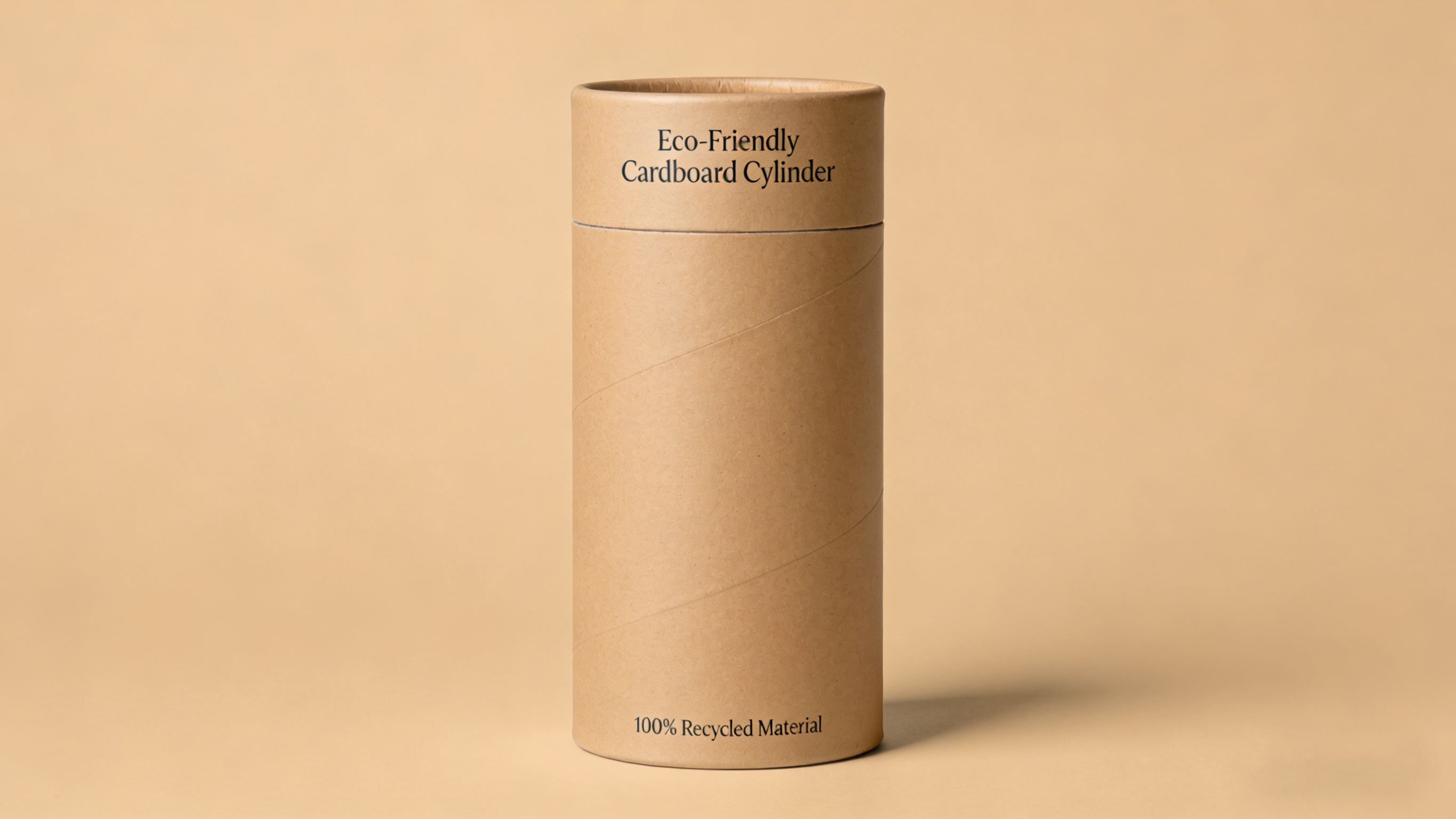
Understanding the different styles helps you choose the right format for your product:
Food paper tubes: Designed with food-safe materials and secure sealing lids. Commonly used for powders, snacks, and dry goods.
Cosmetic paper tubes: Sleek, customizable tubes for skincare, lip balm, and beauty products. Sustainability is a major selling point here.
Mailing tubes: Heavy-duty tubes built to protect documents, artwork, and fragile items during shipping.
Gift tubes: Decorative tubes with premium finishes, often used for seasonal or luxury gifting.
Special paper tubes: Includes windowed tubes, push-pop designs, and other innovative formats that blend function with visual appeal.
1
Yes—and this is one of the biggest advantages of paper tube packaging. Unlike rigid plastic containers, cardboard tubes can be produced in virtually any inner diameter, outer diameter, wall thickness, and length.
Custom sizing starts with specifying your mandrel size (inner diameter) and desired wall thickness. From there, manufacturers adjust the number of paper layers and winding angle to achieve your specifications. Hallpack offers full OEM and ODM services, which means they can produce tubes tailored to your exact dimensions and branding requirements.
The appeal of the paper tube extends well beyond aesthetics. Here's why more brands are switching:
Sustainability: Cardboard tubes are made from recyclable, often recycled materials. For brands committed to reducing plastic use, they offer a credible, consumer-friendly alternative.
Durability: Modern paper tubes—especially those with thick spiral-wound walls—resist compression, moisture, and impact surprisingly well. They're far sturdier than flat-pack cartons of comparable weight.
Branding potential: The cylindrical format gives you a 360-degree branding surface. With full-color printing, foil, and embossing options, a well-designed paper tube can genuinely elevate perceived product value.
Versatility: From push-pop sushi tubes to elegantly finished perfume packaging, the format adapts across industries and price points.
If you're looking to source cardboard tube packaging rather than manufacture it in-house, partnering with an experienced manufacturer makes the most sense for the vast majority of brands.
Hallpack (Heshan) Packaging Products Co., Ltd. is a China-based manufacturer with over 20 years of industry experience. They produce a wide range of paper tubes—food-grade, cosmetic, mailing, and specialty formats—using eco-friendly, FSC-certified materials. Their facility supports full customization from design through delivery, making them a practical choice for brands that need reliable, scalable production.
You can explore their full product range at hallpack.net.
Cardboard tube packaging is produced through a precise sequence of winding, cutting, finishing, and quality control—each step contributing to the final product's strength, appearance, and functionality. Understanding this process helps you make smarter decisions when specifying dimensions, materials, and finishes for your own packaging.
Whether you're launching a new product or rethinking your current packaging, paper tubes offer a practical, sustainable, and brand-forward solution. The right manufacturer will guide you from concept to finished product—so focus your energy on finding a partner with the experience and certifications to match your standards.