English
 Views: 0 Author: Site Editor Publish Time: 2025-12-24 Origin: Site


We have all been there. You grab a quick sushi lunch on the go, enjoy the fresh flavors, and then look down at the aftermath. Usually, it is a pile of black plastic trays, clear lids, synthetic grass dividers, and soy sauce packets. For years, this has been the standard for takeaway sushi. While convenient, the environmental cost of this single-use plastic is staggering.
As consumers become more environmentally conscious, the demand for sustainable alternatives is rising. Restaurants and packaging manufacturers are responding with innovative solutions that reduce waste without compromising the dining experience. One of the most exciting developments in this space is compostable sushi packaging, particularly the innovative designs like the Sushi Push Pop Tube.
However, simply buying eco-friendly packaging isn't enough. To truly make a difference, we need to understand how to dispose of these items correctly. Throwing a compostable item into a landfill often negates its benefits, and contaminating a recycling bin with food waste causes its own set of problems. This guide will walk you through the nuances of sustainable sushi packaging and how to dispose of it responsibly.
Before we look at disposal, it is important to understand what "compostable" actually means in the packaging world. Unlike "biodegradable," which is a vague term meaning a material will eventually break down (even if it takes decades), compostable refers to materials that break down into non-toxic, natural elements within a specific timeframe under the right conditions.
For sushi packaging to be truly eco-friendly, it is often made from materials like:
Kraft Paper: Unbleached paperboard that is sturdy and breaks down easily.
Bagasse: A fibrous byproduct of sugarcane processing.
PLA (Polylactic Acid): A bioplastic made from corn starch that looks like plastic but is commercially compostable.
The goal is to replace the rigid petroleum-based plastics that typically end up in oceans or landfills with materials that return to the earth.
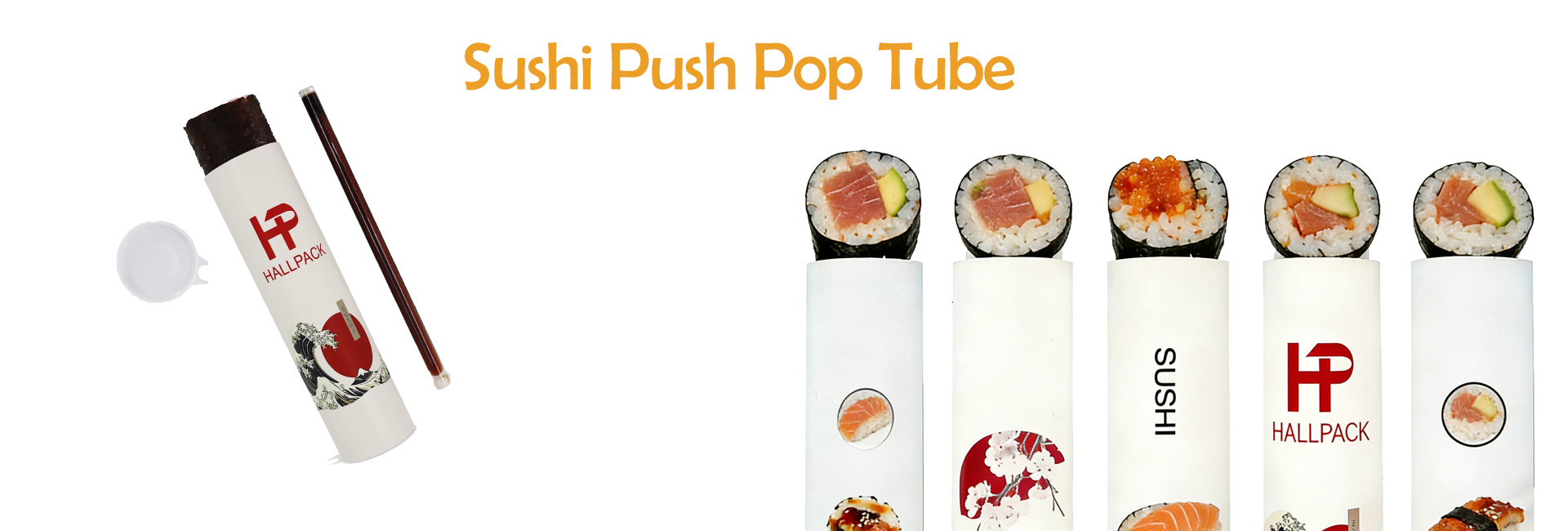
One of the standout innovations challenging the traditional plastic tray is the Sushi Push Pop Tube. This isn't just a container; it is a new way to experience food.
Manufactured by leaders in the industry like Hallpack(Heshan) Packaging Products Co., Ltd., this design addresses the two biggest complaints about takeaway sushi: messy eating and environmental waste. The tube features a "push-to-enjoy" structure. You remove the sauce container, pour the soy sauce into the integrated dispenser, and gently push the sushi up from the bottom.
It keeps the sushi intact, preventing the deformation that often happens in bags or boxes. But beyond the user experience, the construction is what makes it fascinating from a disposal perspective. These tubes are primarily paper-based, utilizing a cylinder structure that is durable yet far more sustainable than rigid plastic.
According to Hallpack's specifications, their tubes are designed for the visual era—perfect for social media moments—but they are also built for safety. The interior of the Sushi Pusher Tube utilizes aluminum foil certified by the U.S. FDA. This non-toxic lining ensures the paper doesn't get soggy and maintains the freshness of the ingredients.
This material combination—paper structural integrity with a protective lining—creates a superior product, but it also means you need to pay attention when you are finished eating.
Disposing of packaging like the Sushi Push Pop Tube or other compostable containers requires a moment of mindfulness. Here is a step-by-step guide to ensure you are doing it right.
Never assume packaging is compostable just because it looks like brown paper. Look for certifications such as BPI (Biodegradable Products Institute) or specific "Compostable" labels. If it doesn't say compostable, it might just be recyclable paper.
Modern packaging is often a composite of different materials. In the case of a Sushi Push Pop Tube:
The Lid/Sauce Container: Check if this is made of PLA (bioplastic) or standard plastic. PLA goes to industrial compost; standard plastic goes to recycling (if clean).
The Tube Body: This is the main paper component.
The Lining: As noted with the Hallpack(Heshan) Packaging Products Co., Ltd. design, the interior may be lined with FDA-certified aluminum foil to preserve freshness.
This is the golden rule for both recycling and composting. Excessive food grease or leftover rice can contaminate recycling streams.
For Recycling: Rinse the item quickly. If the paper is heavily soiled with soy sauce or fish oils, it usually cannot be recycled.
For Composting: Food residue is generally fine for composting, but you must ensure non-compostable linings (like aluminum) are removed if they are not bonded to the paper in a compost-safe way.
Home Compost: Only items labeled "Home Compostable" should go in your backyard bin. These break down at lower temperatures.
Industrial Compost (Green Bin): Many "compostable" packaging items, especially bioplastics, require the high heat of an industrial facility to break down.
General Waste: If the packaging is a mix of paper and foil that cannot be separated, and it is not certified as fully compostable, it unfortunately belongs in the trash. However, using a paper-based tube is still often better than a large plastic tray because it uses less petroleum to produce and takes up less volume in the landfill.
1
To better understand the impact of switching to products like the Sushi Push Pop Tube, let’s look at how they stack up against the industry standard.
Feature | Traditional Black Plastic Tray | Sushi Push Pop Tube (Paper-Based) |
|---|---|---|
Primary Material | Petroleum-based Plastic (Polystyrene/PET) | FSC-Certified Paper / Cardboard |
Degradability | Centuries (creates microplastics) | Months to Years (depending on conditions) |
Disposal Method | Recycling (often rejected due to black color) or Landfill | Recycling or Industrial Compost (depending on lining) |
User Experience | Often messy; lids pop off; requires table | One-handed eating; portable; hygienic |
Visual Appeal | Generic and utilitarian | Customizable, novel, "Instagrammable" |
Sauce Integration | Separate, messy packets | Integrated dispensing systems |
For restaurant owners and food brands, the shift to compostable sushi packaging is not just an environmental decision—it is a business strategy.
Consumers are increasingly voting with their wallets. A brand that uses sustainable packaging like the Sushi Push Pop Tube signals that they care about the planet. It elevates the dining experience from a "cheap takeout meal" to a premium, thoughtful ritual.
Manufacturers like Hallpack(Heshan) Packaging Products Co., Ltd. offer extensive customization options. Unlike generic plastic trays, paper tubes can be printed with high-definition CMYK colors. You can print your logo, brand story, or vibrant patterns directly onto the tube. This turns every customer walking down the street eating your sushi into a moving billboard for your brand.
In the post-pandemic world, hygiene is paramount. The enclosed nature of a tube protects the food better than a snap-on lid that might come loose. Hallpack’s use of FDA-certified materials ensures that the food remains safe and fresh from the kitchen to the customer.
Not necessarily. Many paper products are lined with a thin layer of plastic (polyethylene) to prevent leaking. Unless this lining is PLA or another biodegradable material, the paper cannot be composted. Always check with the manufacturer or the recycling symbols on the bottom.
If the tube is clean and dry, paper tubes are generally recyclable. However, if it is heavily soiled with food or has a non-separable foil lining, check your local municipality's rules. Often, mixed-material packaging (paper + foil) must go in general waste, though it remains a lower-carbon alternative to heavy plastic.
You can source these directly from specialized manufacturers. Hallpack(Heshan) Packaging Products Co., Ltd. is a leading manufacturer with over 20 years of experience, offering one-stop OEM and ODM services to help you design the perfect sustainable solution for your brand.
The transition away from single-use plastics is a journey, not a sprint. While we strive for a world where every piece of packaging can be tossed into a garden compost bin, we must navigate the current landscape with knowledge and care.
Innovations like the Sushi Push Pop Tube bridge the gap perfectly. They offer a significant reduction in plastic usage, a superior customer experience, and a canvas for beautiful branding. By choosing these materials and disposing of them responsibly, we can enjoy our favorite Japanese cuisine without leaving a lasting mark on the planet.
If you are a business owner ready to upgrade your packaging game, consider exploring the customized solutions offered by experts like Hallpack. The planet—and your customers—will thank you.