Views: 0 Author: Site Editor Publish Time: 2026-01-05 Origin: Site


The way we eat is changing. The days of accepting crushed rolls and leaking soy sauce packets as the standard for takeout sushi are fading. In the visual era of dining, presentation is everything, but safety is non-negotiable. Enter sushi push-up packaging—a revolutionary design that is transforming how consumers experience Japanese cuisine on the go.
While the interactive "push-to-enjoy" mechanism is generating buzz on social media, the real innovation lies inside the tube. For food service operators and packaging distributors, the critical question isn't just about how it looks, but what it's made of. Specifically, how do manufacturers ensure these paper-based tubes are safe for direct food contact?
In this guide, we explore the safety standards, material science, and design benefits of Sushi pop up tubes, with a specific focus on the FDA-approved materials used by industry leaders like Hallpack.
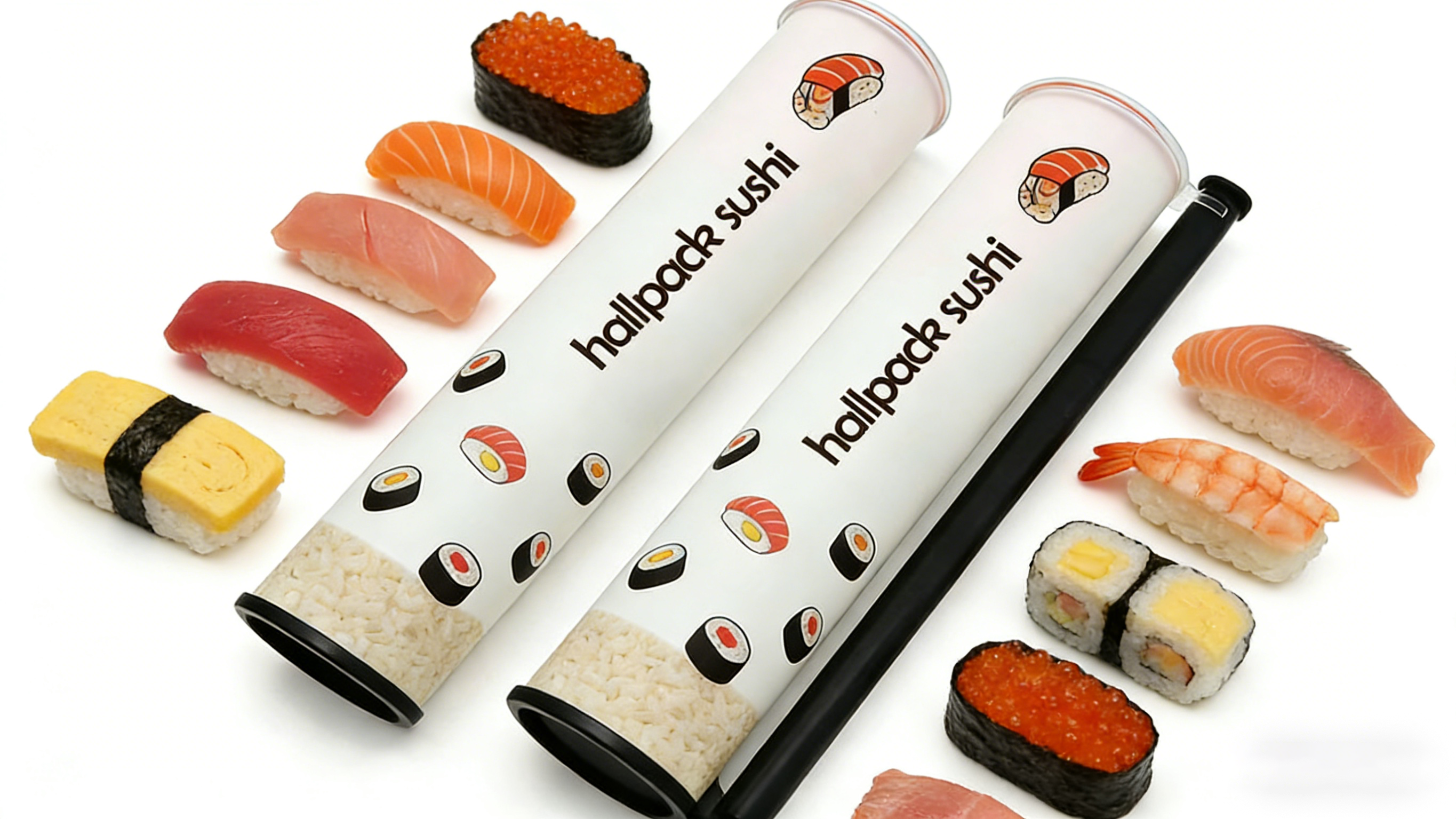
Traditional takeout containers are passive; they simply hold the food. Sushi push-up packaging is active. It transforms the meal into an interactive experience. Designed specifically for modern dining concepts, these tubes solve the age-old problems of deformation and flavor mixing.
The structure is ingenious yet simple:
The Form: A sturdy paper cylinder (often 59mm in diameter and 230mm in height) that perfectly houses a sushi roll.
The Mechanism: A movable bottom plate allows the customer to gently push the sushi upward as they eat, similar to a push-pop ice cream.
The Integration: High-quality versions feature an integrated floating sauce dispenser, allowing for a clean dip without the mess.
This design ensures that every piece of sushi arrives in the customer's hands exactly as the chef intended, maintaining its original form and distinct flavors.
When dealing with paper packaging for moist foods like sushi rice and fresh fish, the barrier between the packaging and the food is the most critical safety component. Standard cardboard is porous; it absorbs moisture, which can lead to soggy rice, structural failure of the tube, and potential bacterial growth.
To combat this, manufacturers must use a lining that is impermeable and food-safe. This is where FDA compliance becomes the industry benchmark.
Leading manufacturers, including Hallpack, utilize an interior lining made of aluminum foil certified by the U.S. FDA. This material choice is deliberate and offers three primary benefits:
Safety and Toxicity: The FDA certification ensures the material is non-toxic, harmless, and chemically stable. It will not leach chemicals into the food, even when in contact with acidic ingredients like vinegar-seasoned rice.
Freshness Preservation: Aluminum foil acts as an exceptional barrier against light, oxygen, and moisture. This helps maintain the sushi's optimal taste and texture during transit.
Structural Integrity: The lining prevents the paper tube from absorbing liquids from the soy sauce or the sushi itself, ensuring the "push" mechanism works smoothly every time.
Hygiene is a top priority for consumers, especially when eating on the move. Sushi push pop packaging offers a distinct sanitary advantage over eating with bare hands or struggling with chopsticks in a car or park.
The design minimizes direct contact between hands and food. The consumer interacts with the tube, pushing the sushi up bite by bite. Furthermore, the integrated sauce dispenser is a game-changer for hygiene.
No Spills: The sealed structure prevents soy sauce from staining hands or clothing.
Controlled Dipping: The dispenser supports multiple small-portion dips, aligning with the traditional way of eating sushi without the risk of dropping the roll into a tray of sauce.
1
To understand the upgrade sushi push-up packaging represents, it helps to compare it directly with the industry standard.
Feature | Standard Plastic Clamshell | Hallpack Sushi Push-Up Tube |
|---|---|---|
Material | Single-use plastic (PET/PP) | Paperboard with FDA Aluminum Lining |
Food Safety | Good, but prone to condensation | Excellent freshness preservation via foil barrier |
Portability | Requires a flat surface to open | Designed for one-handed, on-the-go eating |
Presentation | Utilitarian and common | High-end, "Instagrammable" aesthetic |
Sauce Solution | Loose sachets or messy pouring | Integrated floating sauce dispenser |
Brand Impact | Low differentiation | High visibility and social sharing potential |
Absolutely. In fact, customization is one of the strongest selling points of Sushi pop up tubes. Because the exterior is made of high-quality paper, it serves as a 360-degree canvas for branding.
Unlike clear plastic trays where the only branding is a sticker, these tubes allow for full CMYK color printing. Brands can incorporate:
Signature Logos: Placed prominently for visibility during consumption.
Brand Colors: Whether it’s sophisticated business tones or vibrant, lively shades, the packaging becomes an extension of the restaurant's interior design.
Custom Dimensions: While standard sizes exist, the height can be fully customized to accommodate different roll lengths or portion sizes.
This level of customization turns a simple takeout order into a mobile advertisement. As customers share their unique dining experience on social media, the branded tube ensures the restaurant gets the credit.
Sustainability is a complex equation in food packaging. While the interior requires a foil lining for safety, the primary structure of sushi push-up packaging is paper-based. This represents a significant reduction in plastic usage compared to heavy, rigid plastic trays and lids.
By choosing a paper tube structure, businesses signal a commitment to reducing single-use plastics. The materials used are generally lighter than rigid plastic, which can also contribute to lower shipping emissions. However, the true eco-friendly advantage lies in the reduction of waste: no need for separate sauce cups, plastic bags for sauce packets, or extra napkins to clean up spills.
The transition to sushi push-up packaging is more than a trend; it's a response to a market that demands convenience, hygiene, and style. However, the cool factor should never compromise safety. By utilizing FDA-approved aluminum linings, manufacturers like Hallpack ensure that this innovative packaging is as safe as it is stylish.
For businesses looking to stand out in a crowded delivery market, these tubes offer a unique opportunity to protect the product and promote the brand simultaneously.
Ready to revolutionize your takeout service? Contact Hallpack today to discuss custom sizes and branding options for your business.


 English