English
 Views: 0 Author: Site Editor Publish Time: 2025-12-12 Origin: Site


As a tea brand owner, your packaging is far more than just a container—it's your product's bodyguard, a silent salesman, and the physical embodiment of your brand spirit. In today's market, this choice is more critical than ever: stick with the traditional metal tin, or embrace the modern feel of paper tubes?
We delve into every detail of both packaging options to help you make an informed business decision. This article will clearly demonstrate why, for most modern tea brands, paper tube packaging is quickly becoming the superior, more forward-thinking choice.
Feature | Paper Tubes | Tin Cans |
Eco-Friendly Image | ★★★★★ (Excellent) | ★★☆☆☆ (Fair) |
Initial Cost | ★★★★★ (Lower) | ★★★☆☆ (Medium-High) |
Customization Flexibility | ★★★★★ (Very High) | ★★★☆☆ (Medium) |
Shipping Cost | ★★★★★ (Lighter) | ★★★☆☆ (Heavier) |
Freshness Preservation | ★★★★☆ (Very Good*) | ★★★★★ (Excellent) |
Brand Premium Feel | ★★★★☆ (Artisanal/Natural) | ★★★★★ (Classic/Luxury) |
Consumer Reusability | ★★★☆☆ (Good) | ★★★★★ (Excellent) |
Shelf Impact | ★★★★☆ (Modern, Stands Out) | ★★★☆☆ (Traditional, Familiar) |
*With modern high-barrier liners from suppliers like China Paper Container.
Let's be frank: sustainability is no longer a niche trend but a mainstream market demand. Your packaging choice directly tells consumers what your brand values.
Renewable & Recyclable: Made primarily from paperboard, often with high recycled content. It's widely accepted in recycling streams and is biodegradable under the right conditions.
Lower Carbon Footprint: The production process generally consumes less energy compared to mining and smelting metal. Their lighter weight significantly reduces carbon emissions during transportation.
Natural & Authentic: The texture and feel of paper inherently communicate "natural," "organic," and "thoughtful"—adjectives that perfectly align with the premium tea experience.
The China Advantage: Working with a specialized manufacturer like China Paper Container means accessing expertise in creating truly sustainable solutions, from sourcing FSC-certified paper to using plant-based inks and adhesives.
Energy-Intensive Production: Mining bauxite (for aluminum) or iron ore and the smelting process are extremely energy-heavy.
Recycling is Good, But... While metals are infinitely recyclable, the actual recycling rate varies greatly by region. The mining process itself causes significant ecological disruption.
Perception is Reality: To a growing segment of consumers, especially younger demographics, metal packaging feels like "old industry" and generates more "guilt" upon disposal, even if it's technically recyclable.
Choosing paper tubes isn't just an eco-decision; it's a powerful marketing and branding decision. It allows you to authentically communicate a commitment to the planet, which resonates deeply with modern consumers.
Sentiment is great, but business runs on practicality. Here’s how the numbers stack up.
Paper Tubes: A major win here. The tooling (cylinders for printing) is far simpler and cheaper than metal stamping dies. This allows for lower MOQs, making it feasible for small-batch, artisanal tea brands to have highly customized packaging. Suppliers like China Paper Container often offer greater flexibility for short runs and design changes.
Tin Cans: The initial tooling cost is very high. This makes high MOQs a necessity to amortize the cost, locking out smaller players or making experimentation prohibitively expensive.
Paper Tubes: They are much lighter. This translates directly into lower shipping costs, especially for international brands. They can also be shipped flat (knocked-down) and assembled locally, saving up to 70% on inbound shipping volume.
Tin Cans: You are shipping heavy metal. The cost difference in logistics, especially air freight, is substantial. They must be shipped in their final form, taking up fixed space.
3. Filling Line & Speed:
Both can be automated at high speeds. If you're switching from metal to paper, there will be an adjustment period and potential investment in new seaming/closing equipment. For new brands starting with paper, the machinery is often more affordable.
This is the most common concern about paper packaging. The truth? Modern paper tubes are more than up to the task.
The Enemies of Tea: Light, moisture, oxygen, and odor.
Tin Cans: The undisputed champion of creating an absolute barrier. Lightproof, hermetic when sealed correctly. The risk? Potential for metallic taste transfer if the interior lacquer is flawed, and condensation can form inside with temperature swings.
Paper Tubes (The Modern Kind): Today's solutions are engineering marvels. They use multi-layer constructions:
Outer Layer: High-quality printed paper for branding.
Barrier Layer: A thin, food-grade foil laminate or metallized film. This is the secret weapon—it blocks light, moisture, and oxygen just as effectively as a full tin.
Inner Layer: Food-safe contact paper or polymer.
This is the expertise offered by companies like China Paper Container. They don't just sell tubes; they engineer barriers specifically for hygroscopic products like tea and coffee.
Conclusion: For a typical tea shelf life of 18-24 months, a properly constructed paper tube with a high-quality barrier liner provides excellent and wholly sufficient protection. The gap in "freshness preservation" between the two packaging types has effectively been closed by technology.
On the Shelf:
Paper Tubes stand out. Their cylindrical shape is distinctive, and the print quality can be stunning—vibrant colors, textured finishes, embossing, and foil stamping all work beautifully on paper. They look modern, artisanal, and premium.
Tin Cans look classic and trustworthy. They have a weighty, solid feel that conveys value. However, in a sea of products, they can look somewhat "samey" and traditional.
The Unboxing & Usage Experience:
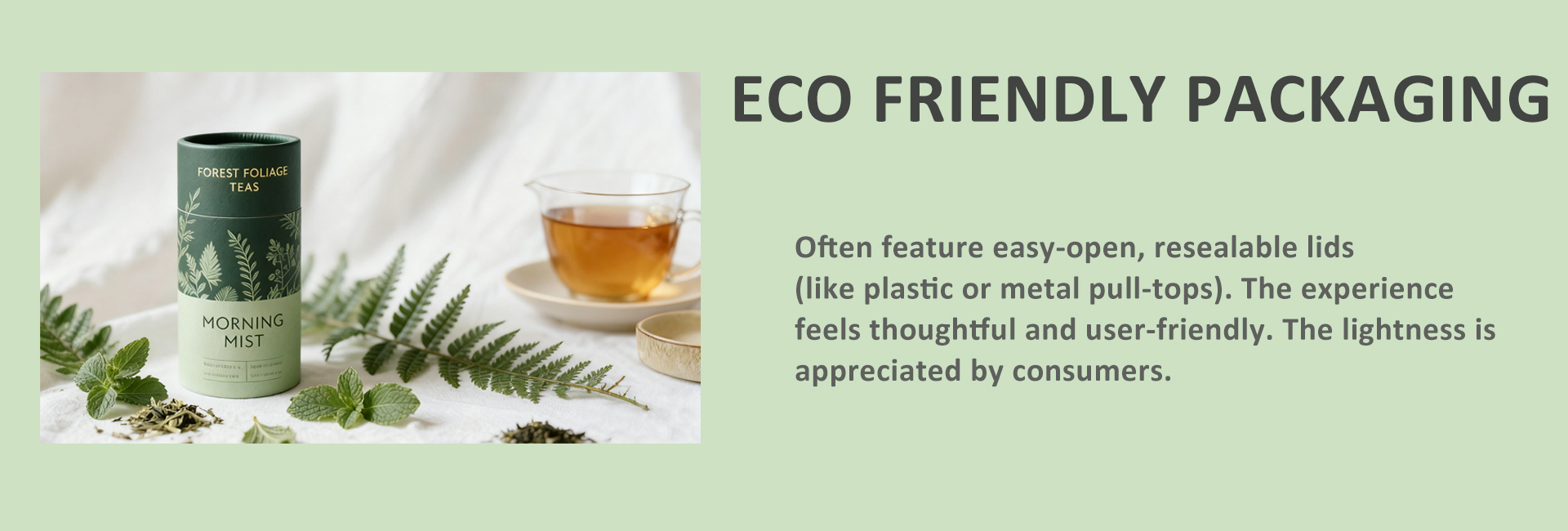
Paper Tubes: Often feature easy-open, resealable lids (like plastic or metal pull-tops). The experience feels thoughtful and user-friendly. The lightness is appreciated by consumers.
Tin Cans: The "click" of opening a tin is satisfying. However, they can have sharp edges, and once the primary seal is broken, the lid often doesn't reseal as perfectly, risking staleness. Their weight can be perceived as either "quality" or "clumsy."
The Reuse Factor:
Tin Cans win the reuse battle. People love keeping them for sewing kits, storing spices, or as pencil holders. This extends the brand's presence in the home.
Paper Tubes are catching up. Sturdy tubes are also reused for crafts, as containers, or even as small vases. Their attractive design encourages this.
Is built on values of sustainability, nature, and innovation.
Targets a modern, environmentally-conscious consumer (Millennials, Gen Z).
Is artisanal, small-batch, or frequently updates designs/blends (thanks to low MOQs and easy customization).
Is mindful of logistics costs and overall carbon footprint.
Works with a technical partner like China Paper Container to ensure the highest barrier protection.
Has a heritage, classic, or ultra-luxury positioning where traditional weight and feel are non-negotiable.
Sells teas intended for very long-term aging/cellaring (over 5 years), where the absolute barrier of metal is preferred.
Has an established customer base that equates heavy metal solely with premium quality and is resistant to change.
Has the volume to justify high MOQs and the logistics budget for heavier shipping.
The trajectory is clear. As barrier technology advances and consumer demand for sustainability becomes non-negotiable, paper tube packaging will continue to gain ground. It offers a compelling combination of eco-credentials, cost-effectiveness, stunning brand presentation, and proven product protection.
For a brand looking to the future, the question isn't "Can paper tubes protect my tea?"—with today's technology, they absolutely can. The real question is: "Is my brand ready to embrace the packaging that reflects where the market is headed?"
Making the switch to paper, especially with an expert partner, isn't a compromise—it's a strategic upgrade for a modern tea brand.
Considering the switch? Start a conversation with a specialist like China Paper Container to explore custom paper tube solutions engineered specifically for the unique needs of premium tea.
China Paper Container
paper composite with lids
paper tube packaging tea