English
 Views: 0 Author: Site Editor Publish Time: 2026-01-27 Origin: Site


The global beauty industry is undergoing a massive transformation. Consumers are no longer just looking for the best scent; they are scrutinizing the packaging it comes in. As sustainability moves from a trend to a requirement, brands are swapping plastic and excessive glass for eco-friendly alternatives. This has led to a surge in the popularity of paper tube perfume packaging.
However, perfume is a volatile, delicate, and often expensive liquid. Paper, by its nature, is porous and absorbent. This creates an obvious engineering challenge: How can a paper tube effectively contain or protect a liquid fragrance without losing structural integrity or allowing the scent to evaporate?
The answer lies in advanced manufacturing techniques. Modern Perfume Paper Tubes are not simply rolled cardboard; they are sophisticated, multi-layered engineered products designed to provide specific barrier properties. Whether serving as primary packaging for solid perfumes or robust secondary packaging for glass bottles, the manufacturing process determines their success.
When manufacturing a paper tube for the fragrance industry, there are two main enemies: moisture and air.
If the tube is used for solid perfumes (balms), the oils must not seep into the paper layers, which would cause staining and structural failure. If the tube is used as secondary packaging (housing a glass bottle), it must be rigid enough to prevent breakage and resistant to ambient humidity to maintain its premium look on the shelf.
To achieve this, manufacturers utilize a combination of lamination, specialized adhesives, and precision winding.
Creating a high-barrier Perfume Paper Tube involves several distinct steps. It is rarely a single piece of material but rather a composite structure.
The process begins with selecting high-quality kraft paper. However, raw paper provides zero barrier protection. To fix this, the innermost layer of the tube is often treated or laminated before the winding process begins.
For solid perfumes or direct-contact applications, manufacturers apply a lining. This is often a food-grade aluminum foil liner, a PE (polyethylene) coating, or a wax lining. This creates an impermeable wall between the product and the paper.
For secondary packaging (protecting a bottle), the focus is on structural density and exterior coatings to repel moisture and dust.
The structural core of the tube is created using spiral winding. Multiple plies of kraft paper are fed through a mandrel. As they are wound, strong adhesives are applied between the layers.
The choice of adhesive is critical for barrier properties. If the glue has high water content, the tube might warp. High-quality manufacturing uses low-moisture adhesives and high compression pressure. This creates a wall thickness that is incredibly dense, making the tube shock-resistant—a vital feature for protecting glass perfume bottles inside.
Once wound, the long tubes are cut and sent to a drying room. This step is often overlooked but is crucial for barrier integrity. By removing all excess moisture from the adhesive and the paper itself, the manufacturer ensures the tube won't shrink or change shape later. A properly cured tube is less susceptible to absorbing environmental humidity.
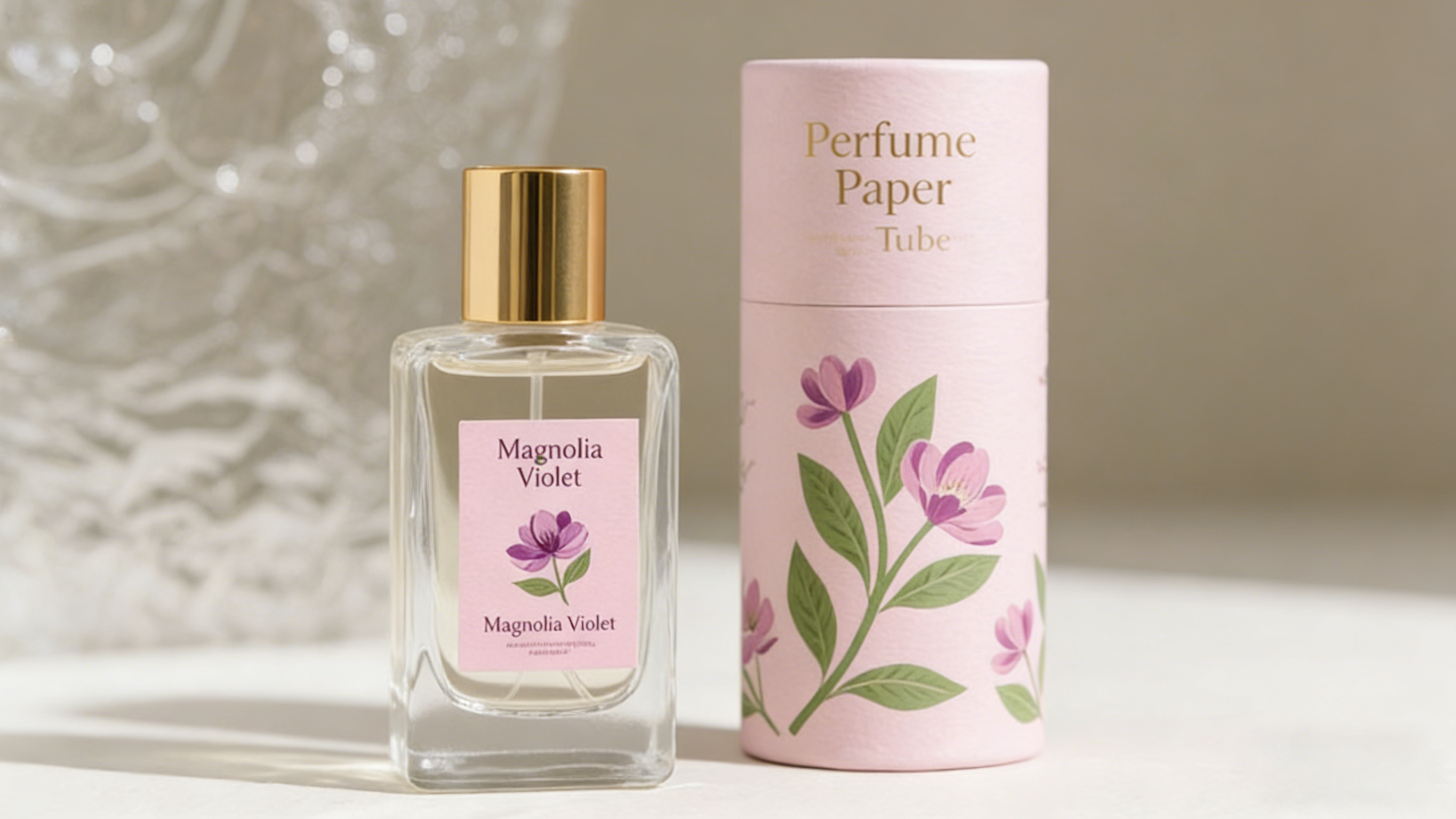
Different perfumes require different levels of protection. Manufacturers choose the lining based on whether the paper tube is the primary container or a secondary shield.
The following table outlines the most common lining materials used to ensure barrier properties:
Lining Material | Barrier Level | Best Application | Key Benefit |
|---|---|---|---|
Aluminum Foil | High | Solid perfumes, oil-based balms | Complete block against air, light, and moisture; prevents oil staining. |
PE (Polyethylene) Coating | Medium-High | Semi-solids, secondary packaging | Oil resistance and moisture barrier; lighter weight than foil. |
Food-Grade Wax | Medium | Eco-friendly solid perfumes | Biodegradable and natural; good for organic brands. |
Art Paper (Unlined) | Low | Secondary packaging (Outer Box) | Focuses on printability and aesthetics; relies on the glass bottle for liquid containment. |
Beyond the chemical barriers (linings and glues), the physical design of the paper tube perfume packaging plays a massive role in protection.
High-end perfume tubes feature rolled edges. This isn't just for looks; rolling the paper creates a reinforced rim that absorbs impact if the tube is dropped. Furthermore, the friction fit between the lid and the base is engineered to be airtight. A "slow-close" or snug fit ensures that air exchange is minimized, which helps preserve the scent profile even if the primary bottle seal is slightly imperfect.
To ensure the glass bottle inside doesn't rattle or break, manufacturers insert custom-fit platforms. These can be made of high-density foam, but eco-conscious manufacturers like Hallpack are increasingly using molded paper pulp or cardboard inserts. This creates a suspension system within the tube, acting as a shock barrier.
Why go through this engineering effort? Why not stick to plastic? The shift is driven by a combination of consumer demand and practical benefits.
Sustainability: Consumers are actively avoiding single-use plastics. A Perfume Paper Tube is often 100% recyclable or biodegradable.
differentiation: On a shelf lined with glossy, cold plastic and glass, the tactile warmth of paper stands out.
Protection: Cylindrical shapes are naturally stronger than square boxes. A round tube offers superior crush resistance, protecting the expensive glass vial inside during shipping.
1
generally, no. While barrier technologies are advanced, most liquid perfumes contain high concentrations of alcohol which can degrade adhesives over time. The Perfume Paper Tube usually acts as the secondary packaging (the box) or holds solid (wax-based) perfumes.
It depends on the material. Wax and some newer aqueous coatings are fully recyclable and biodegradable. Foil linings usually require the consumer to separate the layers, though technology is improving to make these easier to recycle.
Paper tubes are significantly more durable than standard folding cartons. The spiral-winding process creates a thick, rigid wall that resists crushing much better than a standard square box, making them ideal for shipping fragile glass bottles.
Yes. Manufacturers can apply matte or glossy laminations, or UV coatings to the exterior of the paper tube. This protects the packaging from humidity in bathrooms or splashes of water, ensuring the branding remains pristine.
The manufacturing of Perfume Paper Tubes is a precise science that balances sustainability with heavy-duty performance. Through the intelligent use of barrier linings, high-density spiral winding, and impact-resistant structural design, manufacturers can ensure that these tubes offer robust protection for delicate fragrances.
Whether used as a chic container for a glass bottle or a direct vessel for solid scents, paper tubes prove that eco-friendly choices do not require a compromise on quality or durability. As technology advances, we can expect to see even more innovative barrier solutions that push the boundaries of what paper packaging can achieve.
If you are looking for high-quality, customized paper packaging solutions that meet these rigorous standards, exploring options from experienced manufacturers is the next step for your brand.