Views: 0 Author: Site Editor Publish Time: 2026-09-09 Origin: Site


Every year, the world makes 360.2 million metric tons of plastic trash. In 2020 alone, 20 million metric tons got into our environment. You face more pressure from customers and rules to stop using old-style packaging. This post helps you find and compare top European and American makers of sustainable Paper Container options. You will learn about each company's certifications, where they get materials, and new ideas. These points set the bar for packaging that is truly good for the earth.
Sustainable packaging is not just about recyclability; it includes smart design, renewable materials, and compostability.
Look for FSC, SFI, or PEFC certifications. These labels show the paper came from forests that are managed in a responsible way.
Paper containers can reduce carbon emissions by up to 30% and decompose in months, not hundreds of years.
Top manufacturers such as Smurfit Westrock and Tetra Pak provide certified, recyclable, and compostable choices.
Check claims using outside certifications, and pick a partner that works for your product and market.
Sustainable packaging goes far beyond simple recyclability. The Sustainable Packaging Coalition defines it through five core principles: SMART design, use of recycled or sustainably-sourced renewable materials, labeling for reusability or compostability, engagement with refill models, and investment in recycling infrastructure. You must evaluate each of these dimensions when assessing a potential supplier.
Sustainable packaging involves more than just recyclability; it also should consider elements like end markets and ease of opening.
The materials you choose determine the sustainability profile of your Paper Container. Look for these verified options:
FSC-, SFI-, and PEFC-certified paperboard from responsibly managed forests
100% recycled paperboard from pre- and post-consumer waste
Tree-free paperboard using alternative pulps like bagasse
Water-based coatings and vegetable-oil-based inks
Cellulose acetate window material that is certified compostable
FSC certification remains the gold standard for fiber sourcing, with three label types: 100%, Mix, and Recycled. PEFC certifies nearly 296 million hectares globally, while SFI covers about 363 million acres in North America. You should demand chain-of-custody certificates from any manufacturer you consider.
For compostability claims, EN 13432 governs the European market. This standard requires at least 90% of material carbon to convert to CO₂ within six months. No more than 10% of fragments may remain larger than 2 mm after 12 weeks. Third-party bodies like TÜV SÜD perform these certifications. Water-based coatings can earn BPI certification by meeting ASTM D6400 and EN13432 standards, ensuring your packaging remains PFAS-free.
Lifecycle assessment reveals a complex picture. Cardboard recycles at 69%–74% in the United States, compared to just 13.3% for plastic packaging. That gives paper a more than 5-to-1 advantage in end-of-life recovery. However, production impacts differ significantly.
Metric | Paper | Plastic |
|---|---|---|
Fossil fuel use | Baseline (0%) | 143% more |
GHG emissions (with carbon uptake) | 61% less | Baseline (0%) |
Water usage | Favorable | Higher |
Recycling potential | 80.74% | 6.88% |
Landfill potential | 14.72% | 74.87% |
The Ellen MacArthur Foundation describes two circular economy cycles. The technical cycle keeps materials in circulation through reuse, repair, and recycling. The biological cycle returns nutrients from biodegradable materials to the Earth. Your packaging strategy should align with both cycles.
Composting paper emits more carbon than landfilling it, according to recent LCA studies. Recycled paper shows a higher carbon footprint than virgin paper when biogenic carbon from logging is treated as neutral. These findings highlight why you must examine the full lifecycle, not just the end-of-life scenario.
You now have a clear picture of what makes packaging truly sustainable. The next step involves identifying which manufacturers deliver on those promises. This section presents ten leading companies from Europe and North America. Each one brings distinct strengths to the table. You will find their core details organized in a comparison table below.
The following table summarizes essential information about each manufacturer. Use it as a quick reference when you evaluate potential partners. The data covers founding year, headquarters location, standout products, and key sustainability credentials.
Company Name | Founding Year | Headquarters | Standout Products | Key Sustainability Credentials |
|---|---|---|---|---|
Smurfit Westrock | (merger) | N/A | Corrugated packaging, folding cartons | Sustainability-focused |
Tetra Pak | founded | N/A | Aseptic cartons, food packaging | Sustainability-focused |
Amcor | founded | N/A | Flexible packaging, rigid containers | Sustainability-focused |
Huhtamaki | founded | N/A | Molded fiber, paper cups | Sustainability-focused |
Mondi | founded | N/A | Paper bags, corrugated solutions | Sustainability-focused |
Graphic Packaging International | founded | N/A | Paperboard cartons, cups | Sustainability-focused |
Pactiv Evergreen | founded | N/A | Food service containers, beverage cartons | Sustainability-focused |
Sabert Corporation | founded | N/A | Food packaging, deli containers | Sustainability-focused |
Earthpack | founded | N/A | Compostable paper containers | Sustainability-focused |
founded | N/A | Paper tubes, food-grade containers | Sustainability-focused |
You should approach this list strategically rather than randomly. Start by identifying your product category and packaging requirements. Then match those needs against each manufacturer's standout products. Consider your geographic market and shipping routes. A European partner may serve you better for EU distribution. An American manufacturer might reduce transatlantic shipping costs.
Verify each company's sustainability claims independently. Request chain-of-custody certificates and third-party test reports. Ask about their material sourcing policies and production processes. You want a partner whose environmental commitments align with your brand values. The right Paper Container manufacturer will provide documentation without hesitation.
Finally, consider scalability and customization options. Some manufacturers excel at large-volume standardized production. Others offer flexible customization for unique packaging designs. Hallpack, for instance, provides extensive OEM/ODM services with extensive experience. You can tailor their paper tube products to match your exact specifications. This flexibility proves valuable when you need distinctive packaging that stands out on shelves.
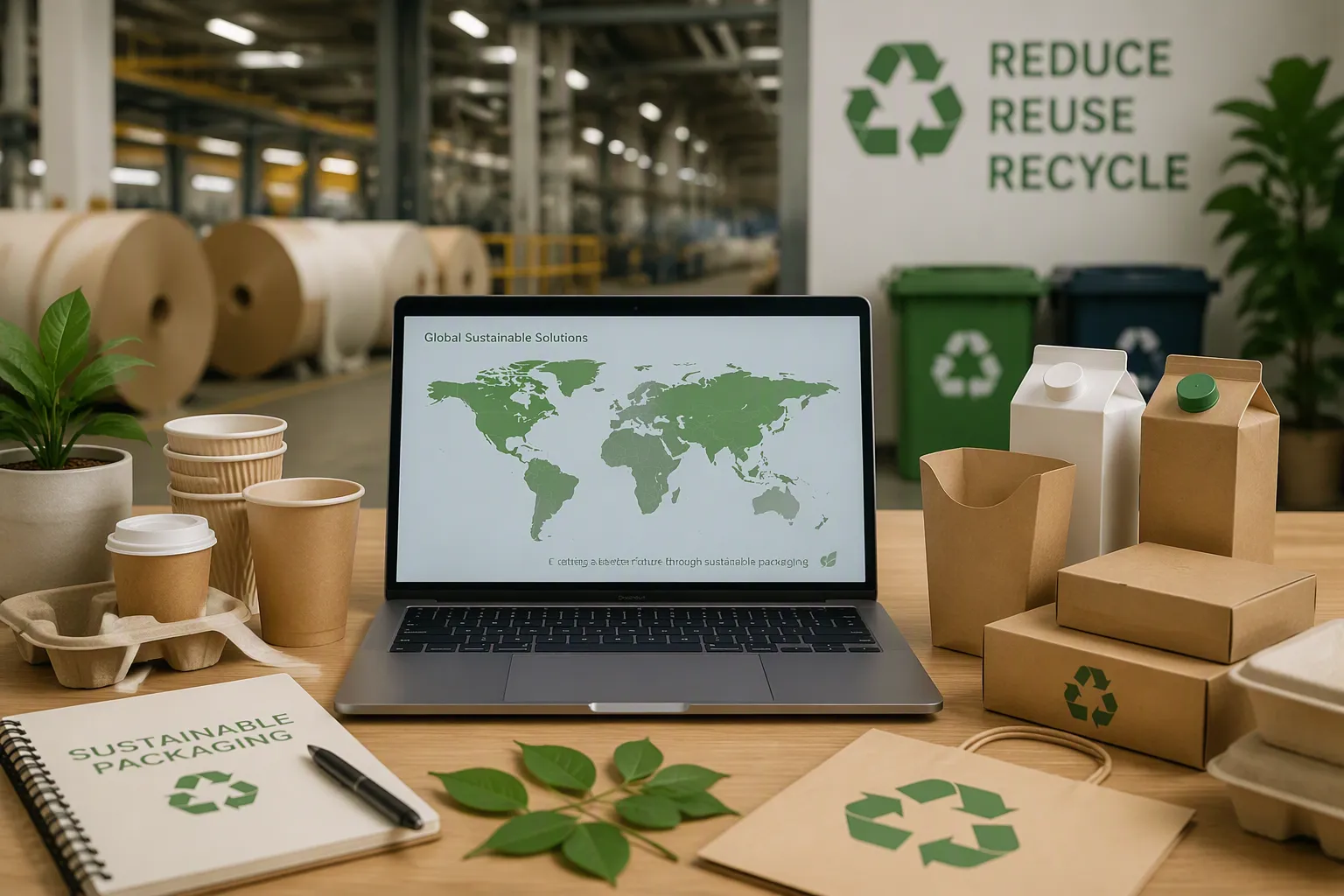
The ten companies on this list lead the way in sustainable packaging. Each one brings its own skills and green goals. Knowing their strengths helps you pick the right partner for your packaging needs. This section looks closely at the first four companies.
Smurfit Westrock is the biggest maker of containerboard in the world. The company works in many countries and plans to grow in LATAM, EMEA, APAC, and North America. Their system covers everything from forests to finished packaging. This gives them strong control over their supply chain. You get steady quality and reliable supply because of their size.
Their green packaging uses renewable, recyclable, and biodegradable materials. The EnShield® paperboard line offers a strong choice instead of plastic and poly-coated materials. This product resists oil and grease without losing function. You can swap single-use plastics for fiber-based options that work just as well. The company also offers complete Bag-in-Box® and Pouch-Up® packaging systems. These cover films, extras, and filling lines. This shows their full skill in liquid packaging.
Their recycling work is very large. Smurfit Westrock handles large amounts of used fiber each year. This closed-loop system keeps materials in use. Wood fibers can be recycled multiple times. This makes paper packaging one of the most recycled materials in the world. A significant portion of all plastic packaging is used for food, so there is plenty of room for paper options. People also want this change. Many shoppers prefer eco-friendly food packaging. Brands that use green packaging see a boost in customer loyalty.
Tetra Pak takes a different path to sustainable packaging. Founded in Lund, Sweden, the company created aseptic carton technology. Their focus is on green materials and better processing methods. You get packaging that keeps food fresh without cooling. This cuts energy use across the supply chain.
Their aseptic cartons mix paperboard with thin layers of aluminum and plant-based plastics. This layered build protects delicate products while keeping renewable fiber content high. Tetra Pak collaborates with farming groups on sustainable packaging initiatives. Their FSC-certified sourcing ensures forests are managed well across their supply chain.
Amcor brings extensive packaging know-how. Based in Zurich, Switzerland, the company aims for recyclable packaging by 2025. Their products range from flexible wraps to rigid containers for many industries. You can use their strong research skills for custom solutions.
Their green plan focuses on designing for recycling from the start. Amcor makes packaging that fits into current recycling systems. This practical method ensures your packaging gets recycled, not thrown away. Their global reach puts manufacturing near your markets. This cuts shipping emissions.
Huhtamaki, founded in Espoo, Finland, shines in molded fiber and paper cup tech. Their key strength is mixing fiber tech, flexible tech, and paperboard tech. High-precision production powers this combined method. You get affordable, creative packaging for many uses.
The company takes charge of its role in food packaging. They face global climate and circularity issues directly. Huhtamaki worked with Slush, a top startup event in Finland, to run a closed-loop recycling system. They gave out recyclable fiber cups, lids, and food containers. Special bins collected the used items. A local recycler turned these into new packaging. This real-world test proves green practices can work on a large scale. It also serves as a model for circular events.
Each of these four companies offers clear benefits. Your pick depends on your product type, market area, and green priorities. The next part covers Mondi and Graphic Packaging International, two more leaders in this field.
Mondi, headquartered in Vienna, Austria, brings a comprehensive approach to sustainable packaging. Their EcoSolutions portfolio targets the entire packaging lifecycle, from material sourcing to end-of-life recovery. You benefit from their focus on recyclable, renewable, and lightweight designs that cut material usage while maintaining barrier safety. Their paper-based substitutes for plastic shrink sheets work well for secondary and transportation packaging.
Mondi's semi-chemical flutings deliver strength, stability, and humidity resistance, ensuring products arrive as intended under demanding transport and storage conditions.
Their packaging runs efficiently on existing machinery, offering strong puncture and tear resistance. Corrugated and solid board options resist crushing and absorb shocks during long-distance transport and heavy stacking. For fresh produce, custom ventilation cut-outs maintain airflow and block mould. Frozen food packaging protects against water vapour and oxygen, replacing aluminium foils and non-recyclable plastics. These solutions reduce freight charges, minimize transportation damage, and enhance warehouse space efficiency.
Mondi holds Cradle to Cradle Certified® Bronze level for their uncoated fine paper portfolio at their Merebank mill in South Africa. This marks the first such certification for paper products in that country. Their Protective Mailer innovation replaces plastic bubble wrap with open flute paper, co-created with a leading online marketplace. An ISTA-certified laboratory validates their testing capabilities. Amazon's APASS network approval enables packaging compliance.
Graphic Packaging International serves beverage, food, foodservice, home & garden, personal care, healthcare, pet care, beauty, and e-commerce markets. Their paperboard solutions help eliminate plastic bottle and can packaging waste. They use recycled and wood-based fiber from responsibly managed forests, meeting both consumer needs and planetary sustainability goals.
Their innovation pipeline generated significant revenue from customer packaging projects. A large proportion of products sold that year were designed to be recyclable. Many plastic packages were replaced with paperboard alternatives over two years. A portfolio of many patents supports consumer packaging applications. You can trust their sourcing: most of their purchased forest products come from sustainable sources. Renewable electricity projects will cover a substantial portion of global electricity needs.
Their PaperSeal™ Shape tray, launched with Elaborados Naturales in Spain, contains less than 10% plastic. This design complies with European PPWR and recycles in household streams without removing the barrier liner. The tray replaces traditional plastic options for Patatas Kebab and Patatas Bravas SKUs.
Graphic Packaging launched a new PaperLite™ tray in collaboration with Pilgrim's Food Masters, which is certified as recyclable by OPRL (On-Pack Recycling Label).
Both manufacturers offer distinct advantages for your Paper Container sourcing strategy. Mondi excels in industrial and transport packaging. Graphic Packaging leads in consumer-facing innovations with strong recyclability metrics.
Pactiv Evergreen focuses on eco-friendly packaging for fast food containers. You benefit from their strong programs that cut waste and boost renewable energy. Their product range includes molded fiber plates and trays for many food packaging needs. They also offer custom solutions for your specific client needs, ensuring flexibility across different uses.
The company got ISCC Plus certification at multiple US plants. This certification covers bio-based and recycled resins. It uses a mass balance method to track recycled and renewable content. You get access to products with certified circular polymers. This helps their goal of using recycled, recyclable, or renewable materials.
Pactiv Evergreen said its molded fiber egg cartons and filler flats got Forest Stewardship Council (FSC) Recycled certification. This shows these products come from recycled materials. The certification covers multiple plants. You can trust this when you look for sustainable packaging for your food products.
Sabert launched Pulp Ultra®, a molded pulp product that is a big step forward in food packaging. This new product keeps them as leaders in sustainable paper containers made from molded fiber. Their products include square paper bowls with grease-resistant, recyclable paperboard for cold and warm foods. Pulp Max® bowls are compostable molded pulp that can go in microwaves and refrigerators and resist oil and grease well.
Their catering options include UltraStack® Platters with button locks that click and deep walls to stop spills. Clear UltraStack® Square Platters have strong steep walls and a clear look for showing food. The Rectangular Platter looks good with click locks for quick packing. You can pick from these based on your food service needs.
Sabert updated EcoSnap with a corrugated base, mixing eco-friendly materials with strong support. Their buying of Colpac Limited makes their sustainable paperboard skills stronger in UK, Ireland, and Europe. You gain from their certifications for fiber sources, making sure they source responsibly. These credentials prove that your Paper Container meets high environmental standards.
Earthpack focuses on the North American market with certified compostable packaging. They offer FSC-certified paper and compostable linings that meet ASTM D6400 standards. Their products include recycled bags, boxes, mailers, and tissue paper for eco-conscious retailers. Their "bloxes" are made-to-fit boxes that cut wasted space and lower shipping costs.
Their customer service is a standout feature. You can get custom printing options to show your brand while staying eco-friendly. Their certified compostable materials break down in commercial facilities, offering a real end-of-life solution. Their prices run a bit higher because of certified materials, though smaller businesses may feel the cost. For large international exports, their scalability has limits. Still, for North American retailers wanting reliable compostable packaging, Earthpack delivers steady value.
Hallpack brings extensive paper tube making experience to your packaging needs. Based in Guangdong, China, they focus on OEM and ODM solutions for your exact brand needs. You get FSC-certified materials that ensure your fiber comes from responsibly managed forests. Their advanced facility uses digital printing and vertically integrated raw material sourcing, giving you quality control at every step.
Their products serve many industries. Food-grade paper tubes include sushi push-up tubes, coffee canisters, and ice cream containers with moisture-resistant kraft paper. Cosmetic tubes use recyclable paper with finishes like matte lamination, spot UV, and foil stamping. Mailing tubes for e-commerce use thick walls with custom sizing and printed branding. Each product type meets specific industry needs while staying environmentally responsible.
Hallpack's manufacturing includes tubing, labeling, and crimping, backed by strict quality checks. You get raw material testing, structural strength checks, printing accuracy checks, and food safety compliance verification. Their certifications include FSC, FDA food contact compliance, and EU packaging safety rules. Fast sampling and their export logistics ensures damage-free global delivery to Europe and North America. With a strong customer rating and a solid reorder rate, their record speaks for itself. This mix of customization, sustainability, and global reach makes Hallpack a strong partner for your Paper Container needs.
You must check every green claim a maker makes. Start by looking up the FSC number on the official FSC website. This step shows where the materials come from. A company that says it has FSC should give you its number quickly. Remember that chain-of-custody certification does not cover all products. Each product needs its own certification. Ask for documents for each item you plan to buy.
Watch for tricks that make products seem greener than they are. Words like "eco-friendly" or "green" without hard facts are a warning sign. Some companies focus on one small green feature while hiding bigger problems. Others make claims without outside checks or life-cycle data. You need real proof. Look for certifications from groups like BPI, ASTM D6400, or EN 13432 for compostability. These outside checks build trust and fight false claims.
The best manufacturers are open and honest. They talk about both their wins and their limits. They do not just rely on labels. They explain technical certifications in simple words you can understand. If a partner cannot give you proof or avoids your questions about sourcing, look for another. Good suppliers welcome questions.
Green packaging usually costs more than plastic at first. You need a plan to handle this gap.
Aspect | Guidance |
|---|---|
Cost premium | More than plastic; varies by material |
Cost gap trend | Narrowing as production scales increase and demand rises |
Match packaging to food type | Bagasse or bamboo for hot, oily items; clear PLA for cold salads or drinks |
Certifications | Look for BPI or ASTM D6400 for compostability; relevant food safety approvals |
Supplier evaluation | Reliable stock, strong quality control, flexible customization |
Long-term savings | Bulk orders narrow the price gap; lower shipping, waste fees, and customer appeal offset costs |
Buying in bulk cuts the price gap a lot. Long-term deals with trusted suppliers also give you better prices and faster production. You can make up for higher first costs with lower shipping weights, less waste fees, and more customer loyalty. Test samples with real food to make sure they work before you buy in large amounts. This way, you balance being green with your budget.
Switching to green packaging helps both the planet and your business. The makers on this list give you real options for certification, custom design, and cost. Every Paper Container here comes from responsible sources and can be recycled or composted. These containers break down much faster than plastic. Your company can lower packaging costs. Many companies have shown that switching to sustainable packaging can significantly reduce plastic waste and carbon footprint. Customer surveys show that many people prefer eco-friendly packaging. Look at your current choices now. Call a maker on this list and start your path to being more eco-friendly.
Ask for the FSC chain-of-custody certificate and check the number on the official FSC website. Request third-party test reports for compostability claims, like BPI or TÜV SÜD documents. A good supplier will share these papers without delay.
Expect to pay more than plastic options at first. Bagasse containers often cost more. Buying in bulk cuts this gap a lot. Long-term supplier deals also lower costs and speed up production.
Yes. Makers like Hallpack offer full OEM/ODM services with digital printing, custom sizes, and finishes like matte lamination, spot UV, and foil stamping. You can adjust packaging to your exact needs while keeping eco-friendly materials.
Match each company's top products with your packaging needs. Think about your market area and shipping routes. Check sustainability claims on your own. Look at scale and customization options. A European partner may work better for EU sales, while an American maker could cut transatlantic shipping costs.


 English