Views: 0 Author: Site Editor Publish Time: 2026-01-06 Origin: Site


The way we consume food is shifting. Takeout is no longer just about convenience; it is about the experience. For sushi restaurants and food brands, the challenge has always been maintaining the integrity of a delicate roll during transit. Traditional rectangular trays often lead to shifting, toppling, and the inevitable mixing of wasabi with the dessert.
Enter the sushi push-up tube. This innovative packaging solution addresses the mess of traditional takeout while introducing a playful, interactive element to dining. It transforms a standard lunch into a "push-to-enjoy" moment that customers love to share on social media. However, for this packaging to function correctly, the engineering must be precise.
If the tube is too wide, the ingredients fall apart. If it is too narrow, the rice gets compressed, ruining the texture. Choosing the right specifications is critical for functionality and customer satisfaction. This article answers the most pressing questions regarding the ideal dimensions for sushi tube packaging, helping you determine the best fit for your brand.
While sushi push-up tubes can be customized, there is an industry-standard size that balances ergonomics with the typical dimensions of a sushi roll.
According to manufacturing experts like Hallpack, the standard specification is a 50mm diameter and a 220mm height.
This size is not arbitrary. It is the result of testing the average circumference of popular sushi rolls—such as California rolls or spicy tuna rolls—against the comfort of the average human hand grip.
Dimension | Standard Measurement | Purpose |
|---|---|---|
Diameter | 50mm (approx. 1.97 inches) | Fits standard maki rolls snugly; comfortable handheld grip. |
Height | 220mm (approx. 8.66 inches) | Accommodates a full serving (approx. 8 pieces) plus the sauce mechanism. |
Shape | Cylindrical | evenly distributes pressure; easy to hold and push. |

The diameter is the most important variable in sushi push pop packaging. A diameter of 59mm serves two primary functions: structural integrity and portability.
First, consider the food itself. A standard machine-made or hand-rolled maki roll typically falls between 45mm and 55mm in diameter. A 59mm tube provides just enough clearance for the roll to slide up smoothly without friction damage, yet it is snug enough to keep the ingredients vertically stacked. If the tube were wider, say 70mm, the sushi pieces would tumble sideways during delivery, defeating the purpose of the container.
Second, consider the user. The appeal of the push-up tube is that it can be eaten one-handed, "on the go." A 59mm diameter is roughly the size of a standard soda can or energy drink. It feels natural in the hand, allowing the customer to hold the tube and push the bottom mechanism simultaneously without straining their grip.
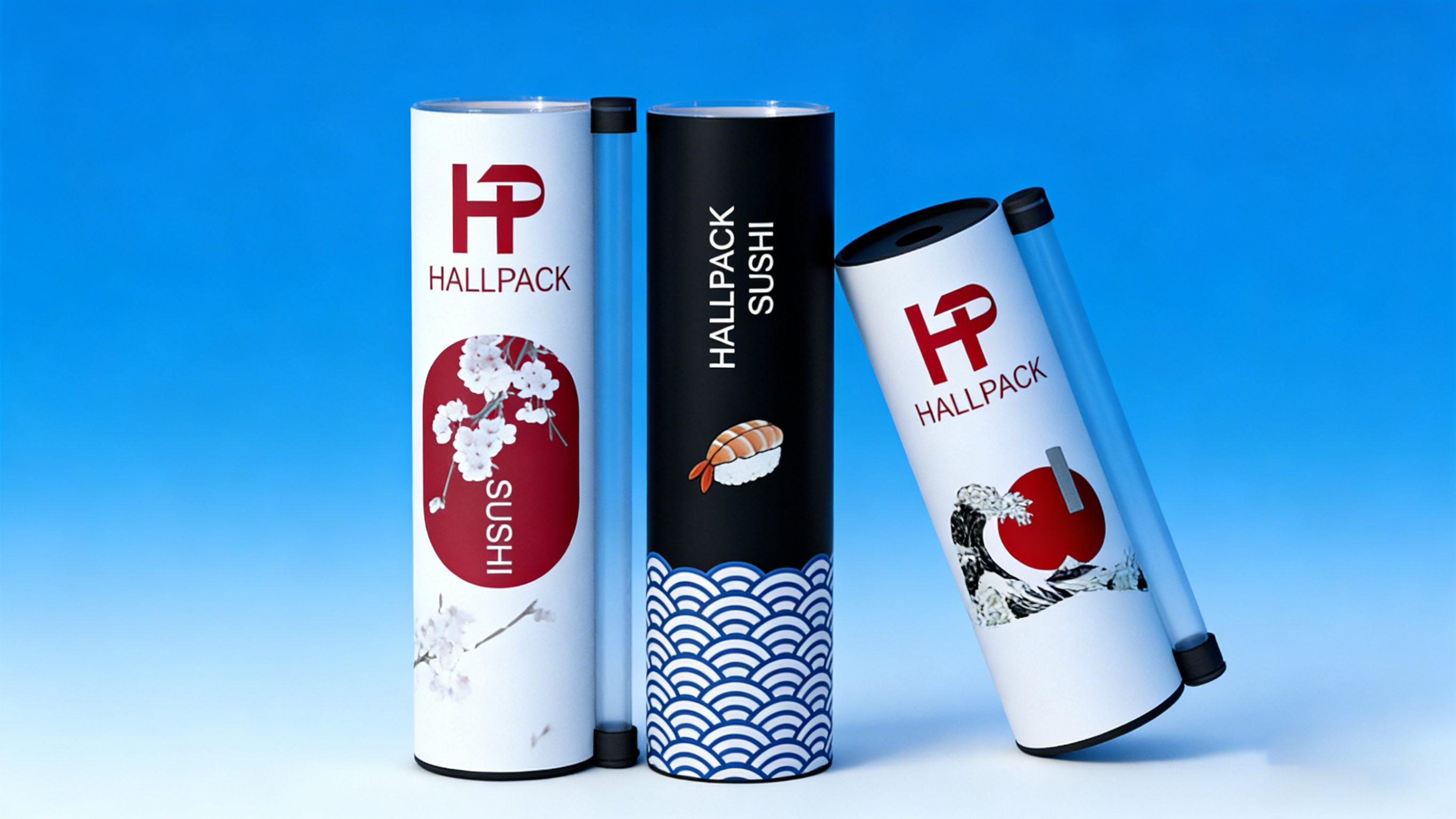
Yes, the height is the most flexible dimension in sushi tube packaging. While 230mm is the standard height for a full meal, brands often adjust this based on their specific menu offerings.
For example, a "snack size" offering might reduce the height to 150mm for a 4-piece roll, while a "party size" or a long-roll concept might extend it. Customization allows businesses to control portion costs and offer varied price points.
Hallpack, a leading manufacturer in this space, notes that height customization is essential for adapting to different scenarios, from quick street food snacks to elaborate dine-in presentations. The manufacturing process for paper tubes allows for easy adjustment of the tube length without requiring expensive new molds, making it a cost-effective way to diversify your product line.
When calculating the required length of your sushi push-up tubes, you cannot simply measure the length of your sushi roll. You must account for the internal mechanism.
The "push-to-enjoy" design requires a floating bottom plate that moves upward. Furthermore, innovative designs often include an integrated sauce dispenser at the top or bottom. This dispenser is a game-changer for avoiding mess, but it occupies vertical space.
If you are designing custom packaging, remember to factor in:
The Base: The push mechanism takes up space at the bottom.
The Sauce Reservoir: If your design includes a floating sauce dispenser (a feature that prevents sauce from staining clothes), this requires specific internal clearance.
The Lid: A secure cap is needed to seal the freshness.
The standard 230mm height usually accounts for these mechanisms while leaving ample room for a satisfying portion of food.
Dimensions mean nothing if the material isn't safe. The best sushi push pop packaging utilizes food-grade materials that ensure safety and freshness.
The interior of high-quality tubes typically features an aluminum foil lining. This lining is often FDA-certified, non-toxic, and safe for direct contact with food. Beyond safety, the aluminum foil acts as a barrier. It prevents rice from sticking to the paper walls, ensures the sauce doesn't seep through and compromise the tube's structural integrity, and helps maintain the food's temperature.
When sourcing these tubes, always verify that the manufacturer uses food-grade linings. This ensures that the beautiful 59mm cylinder remains rigid and clean from the first bite to the last.
Switching to a cylindrical format is a significant departure from the industry norm. However, when you compare the dimensions and functionality, the benefits of the tube format for specific use cases become clear.
Feature | Traditional Plastic Tray | Sushi Push-Up Tube |
|---|---|---|
Footprint | Wide and flat; difficult to carry in one hand. | Compact cylinder (59mm); fits in cup holders and pockets. |
Stability | Susceptible to tipping; sushi slides during transit. | Vertical stacking keeps ingredients secure and intact. |
Dining Style | Requires a table, chopsticks, and two hands. | Handheld, utensil-free, "push-to-eat" style. |
Sauce | Messy packets; difficult to dip on the go. | Integrated dispenser or pour-over design; clean consumption. |
From a marketing perspective, the dimensions of sushi tube packaging offer a unique advantage: a 360-degree canvas.
Unlike a flat box where the lid is the only primary branding surface, a tube offers a continuous surface area. With a 230mm height and a 59mm diameter, you have significant space to wrap your logo, brand colors, and graphics around the entire product.
This shape is visually striking on social media feeds. A customer holding a branded, colorful tube creates a more distinct image than a generic black plastic tray. Manufacturers like Hallpack offer CMYK color customization, allowing brands to reproduce deep business tones or vibrant hues that wrap seamlessly around the tube.
Sustainability is a major concern for modern packaging dimensions and materials. Rigid plastic trays are increasingly frowned upon by eco-conscious consumers.
Paper-based sushi push-up tubes offer a more sustainable alternative. They are primarily constructed from paperboard, a renewable resource. High-quality options are biodegradable and designed to reduce the reliance on single-use plastics. By choosing a paper tube with the right dimensions, you are not only improving the user experience but also aligning your brand with global green initiatives.
The shift toward sushi push pop packaging is driven by a desire for convenience, hygiene, and novelty. By adhering to the ideal dimensions—specifically the 59mm diameter—you ensure that your product is secure, portable, and enjoyable to eat.
Whether you are looking for the standard size or a custom height to fit a unique menu item, getting the specifications right is the first step toward packaging success.
If you are ready to explore custom sizes or need high-volume manufacturing for your restaurant, Hallpack (Heshan) Packaging Products Co., Ltd. has over 20 years of experience in paper tube production. Their team can help you engineer the perfect solution, from FDA-approved materials to custom branding that pops.
[Contact Hallpack today to request a quote and modernize your sushi presentation.]


 English