Views: 0 Author: Site Editor Publish Time: 2026-02-02 Origin: Site


Walking down the freezer aisle is a visual experience. You are surrounded by a kaleidoscope of colors, fonts, and appetizing imagery. But before a customer ever reads the flavor description—before they even decide between Rocky Road or Mint Chip—they notice the shape and size of the package. The physical container communicates volumes about the product inside. Is it a single-serve treat? A premium indulgence? A family-sized staple?
For brands entering the frozen dessert market, understanding the dimensions of ice cream containers is just as crucial as perfecting the recipe. The size determines your price point, your shelf placement, and your manufacturing costs. Furthermore, with the industry shifting toward sustainability, the material of that container matters more than ever.
Whether you are a startup artisan creamery or an established brand looking to rebrand, choosing the right packaging dimensions is a strategic decision. This guide will break down the standard industry sizes, the specific dimensions of ice cream containers, and why making the switch to an eco-friendly paper tube might be the smartest move for your business.
While you can technically package ice cream in any vessel you choose, the industry has settled on four primary categories. Sticking to these general volumes helps with consumer recognition and ensures your product fits into standard retail freezer shelving.
These are the "impulse buy" sizes. You often see them in grab-and-go freezers at convenience stores or served at events. They are designed for immediate consumption. The challenge with this size is branding; you have very little surface area to tell your story, so the design needs to be punchy and clear.
The pint is the undisputed king of premium ice cream. If you are selling a high-fat, low-overrun (less air), super-premium product, this is likely the size you will use. Consumers associate the pint size with higher quality and higher price points. It is small enough to be a "personal indulgence" but large enough to share if absolutely necessary.
Quarts occupy the middle ground. They are often used for premium brands that want to offer a slightly better value proposition than the pint, or for frozen yogurt and sorbet brands. It is a substantial size that signals "take home and keep in the freezer" rather than "eat in one sitting."
Historically, the half-gallon (64 oz) was the standard family size. However, over the last decade, "shrinkflation" has reduced the standard family tub to 56 oz or even 48 oz, though the physical footprint on the shelf looks similar. This size is typically reserved for standard economy ice cream rather than artisanal blends.
Knowing the volume is one thing, but knowing the physical dimensions—height and diameter—is vital for graphic designers and logistics managers. Below is a table outlining the typical dimensions for food grade paper tube packaging used in the ice cream industry.
Note: Dimensions can vary slightly by manufacturer. These are industry averages for paper-based round containers.
Container Type | Volume (oz) | Volume (ml) | Top Diameter (mm) | Bottom Diameter (mm) | Height (mm) |
|---|---|---|---|---|---|
Mini Cup | 3 oz | ~90 ml | 75 mm | 60 mm | 45 mm |
Small Cup | 4 oz | ~120 ml | 75 mm | 62 mm | 52 mm |
Standard Cup | 5.5 oz | ~160 ml | 85 mm | 70 mm | 50 mm |
Large Cup | 8 oz | ~240 ml | 90 mm | 72 mm | 60 mm |
Standard Pint | 16 oz | ~473 ml | 98 mm | 75 mm | 100 mm |
Tall Pint | 16 oz | ~473 ml | 90 mm | 72 mm | 115 mm |
Quart | 32 oz | ~946 ml | 115 mm | 95 mm | 135 mm |
When discussing how big ice cream containers are, we cannot ignore the material. Plastic tubs and paper cartons behave differently. Plastic often requires a tapered shape (wider at the top, narrower at the bottom) to allow the empty containers to stack inside each other during shipping.
However, an eco-friendly paper tube offers more structural versatility. While they can be tapered, straight-walled paper tubes are gaining massive popularity for a few reasons:
Premium Aesthetic: Straight walls look clean, modern, and high-end. They differentiate a brand from the tapered plastic tubs associated with economy ice cream.
Full-Wrap Branding: A cylinder provides a continuous canvas for artwork without the distortion that happens on a tapered cup.
Insulation: High-quality food grade paper tube packaging can be constructed with multiple layers, providing excellent insulation that keeps the product frozen longer once taken out of the freezer.
1
You may have noticed a trend in the table above: the "Tall Pint." Brands like Talenti (plastic) initiated a shift toward verticality, but paper tube manufacturers have perfected it. By slightly reducing the diameter and increasing the height, the container commands more visual attention on the shelf. It literally stands above the competition.
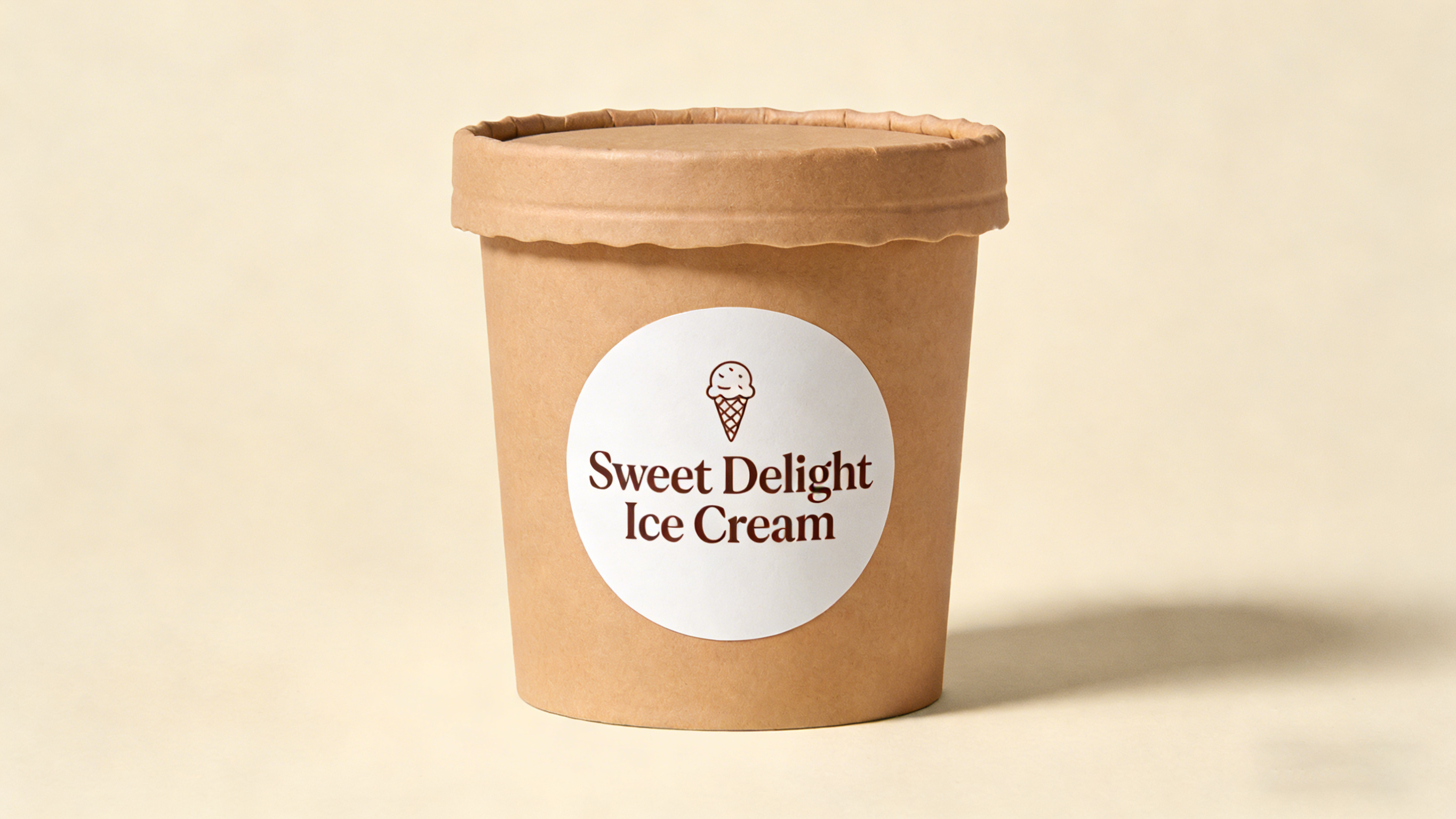
If you look at the offerings from specialized manufacturers like Hallpack, you will realize you aren't stuck with the standard dimensions listed above. One of the biggest advantages of paper tube packaging is the ability to customize.
Because paper tubes are created by winding paper around a mandrel (a metal cylinder), you can easily adjust the height of the tube without needing expensive new molds.
Want a 12 oz "sharing size" that sits between a cup and a pint? You can use a standard pint diameter but cut the tube shorter.
Want a sampler flight? You can create long, skinny tubes that offer just a few bites of different flavors.
This flexibility allows brands to find a "Goldilocks" size that fits their specific profit margins and filling equipment perfectly.
Beyond dimensions, the container's composition is the most critical choice you will make. The shift away from single-use plastics is not a fad; it is a consumer requirement.
Food grade paper tube packaging is the solution for modern brands. Here is why:
Safety: These containers are manufactured specifically for direct food contact. They usually feature a food-safe lining (like PE or a biodegradable coating) that prevents grease and moisture from compromising the paper structure.
Sustainability: Consumers feel better about buying paper. It is renewable, biodegradable, and often recyclable.
Tactile Experience: Paper has a warmth and texture that plastic lacks. It feels organic and crafted, which aligns well with small-batch or artisanal ice cream positioning.
1
When deciding on the size of your container, remember to measure your retail environment.
Freezer Height: Standard grocery store freezer shelves are adjustable, but usually set to accommodate standard pints. If you go with a custom "extra tall" tube, ensure it fits.
Freezer Depth: If your container is too wide (like a squat tub), retailers might fit fewer units in a row, leading to frequent out-of-stocks.
The "Facing": The wider your container, the more "billboard space" you have on the shelf. However, wider containers take up more valuable shelf real estate, which retailers might be hesitant to give a new brand.
1
The size of your ice cream container is the physical embodiment of your brand strategy. A pint says "luxury." A gallon says "value." A custom paper tube says "innovation."
By understanding standard dimensions, you can ensure your product fits the logistics of the cold chain. By experimenting with custom heights and eco-friendly materials, you can ensure your product captures the heart (and stomach) of the consumer.
Don't just pick a tub off the shelf. Measure your margins, consider your environmental impact, and choose a package that elevates the scoop inside.


 English