English
 Views: 0 Author: Site Editor Publish Time: 2026-03-16 Origin: Site


You want to find out which is better—push up paper tubes or plastic packaging. The answer depends on what is most important to you and your brand. Sustainable packaging is very important in today’s market. Many people now like eco-friendly choices because they care about the earth. Market research shows:
More people want sustainable packaging now.
The U.S. sustainable packaging market will be over USD 73 billion by 2034.
More shoppers pick paper tubes instead of plastic.
Hallpack is a leader in eco-friendly packaging solutions. The Push Up Paper Tubes Vs. Plastic debate looks at environmental impact, durability, cost, and how easy it is to use.
Sustainable packaging is becoming more important. Many people now like eco-friendly choices such as push up paper tubes.
Push up paper tubes break down naturally and use materials that can grow back. This makes them better for the environment.
Plastic packaging is strong and keeps out water. But it causes pollution and is often not recycled.
Picking the right packaging depends on what your product needs. Think about things like keeping out water and if your product breaks easily.
You can change paper tubes to look special for your brand. This can help get customers who care about the environment, even if it costs more at first.
Plastic packaging costs less and is simple to make in large amounts. But it can hurt your brand if your customers care about the environment.
Both types of packaging have their own good points. Look at what your brand stands for and what your customers want to choose the best one.
Hallpack helps you pick sustainable packaging that matches your brand’s goals and cares for the environment.
Push up paper tubes are used in many eco-friendly products. They are made from materials like recycled paper or wood pulp. You can see them in packaging for cosmetics, food, and home organizers. Companies print logos and product details on them for branding. You push the product up from the bottom to use it. This makes them simple to use. They are popular for solid perfumes, lip balms, teas, and spices. Their design is stylish and good for the environment. Hallpack makes high-quality, customizable paper tubes for many industries.
Plastic packaging is common in everyday life. It is found in bottles, containers, and wrappers. Most plastic packaging is made from petroleum-based materials. PET and HDPE are two types of plastic used often. These plastics are strong and flexible. They keep products safe and fresh. Many companies use plastic because it works well and people know it. But plastic does not break down easily in nature. This makes recycling and waste management harder.
When you compare push up paper tubes and plastic, you see big differences. The table below shows how they are different:
Feature | Push Up Paper Tubes | Plastic Packaging |
|---|---|---|
Material Composition | Renewable paper or wood pulp | Petroleum-based plastics |
Biodegradability | Biodegradable and compostable | Non-biodegradable |
Moisture Resistance | Less resistant to moisture | Highly moisture resistant |
Durability | More vulnerable to mechanical stress | Highly durable and flexible |
Environmental Impact | Lower ecological footprint | Higher ecological footprint |
Recycling Potential | Recyclable if free from plastic linings | Often not recyclable |
User Experience | Tactile, matte texture, modern look | Smooth, reliable push mechanism |
Push up paper tubes and plastic are not just about looks. You need to think about what matters most to you. Do you want sustainability, durability, or convenience? Push up paper tubes feel modern and eco-friendly. Plastic packaging is strong and protects from moisture. Hallpack helps you pick the best paper tube for your brand.
Tip: When you choose between push up paper tubes and plastic, think about your product’s needs and what your customers like. This will help you make the right choice for your brand.
You notice more brands use sustainable packaging. They want to protect the planet and help people who care about the environment. Hallpack leads by making packaging from renewable materials. They support green practices. You can help by picking packaging that makes less waste and lowers harm to nature.
Push up paper tubes help cut down landfill waste. They are made from biodegradable materials. These tubes break down in nature. You can recycle them easily. This keeps waste out of landfills. Many paper tubes use recycled materials. This helps the environment even more.
The cosmetics industry makes lots of plastic waste. Brands switch to biodegradable kraft paper.
Push up paper tubes break down. Plastic packaging stays in landfills for a long time.
Recycling is easy because paper tubes use one material.
You help nature by picking packaging that does not last forever.
You help the planet by using paper tubes made from renewable resources. Paper comes from wood pulp or recycled paper. These materials grow back and do not run out. Hallpack uses certified sources and eco-friendly ways to make packaging. You trust your packaging supports forests and cuts carbon emissions.
Paper tubes use renewable resources. This avoids using fossil fuels.
You lower your carbon footprint by picking recycled paper.
You help brands show they care about the environment.
Plastic packaging is hard to recycle. Most plastics do not break down in nature. Many plastic packages are used once and thrown away. Recycling rates for plastic are lower than for paper. Plastic often has mixed materials, which makes recycling tough.
Material Type | Recycling Rate (%) | Country/Region |
|---|---|---|
Plastic Packaging | 69.3 | Lithuania |
Plastic Packaging | 59.2 | Bulgaria |
Plastic Packaging | 57 | Czech Republic |
Paper/Cardboard | 116 | Finland |
Paper/Cardboard | 99.7 | Denmark |
Paper/Cardboard | 97.9 | Cyprus |
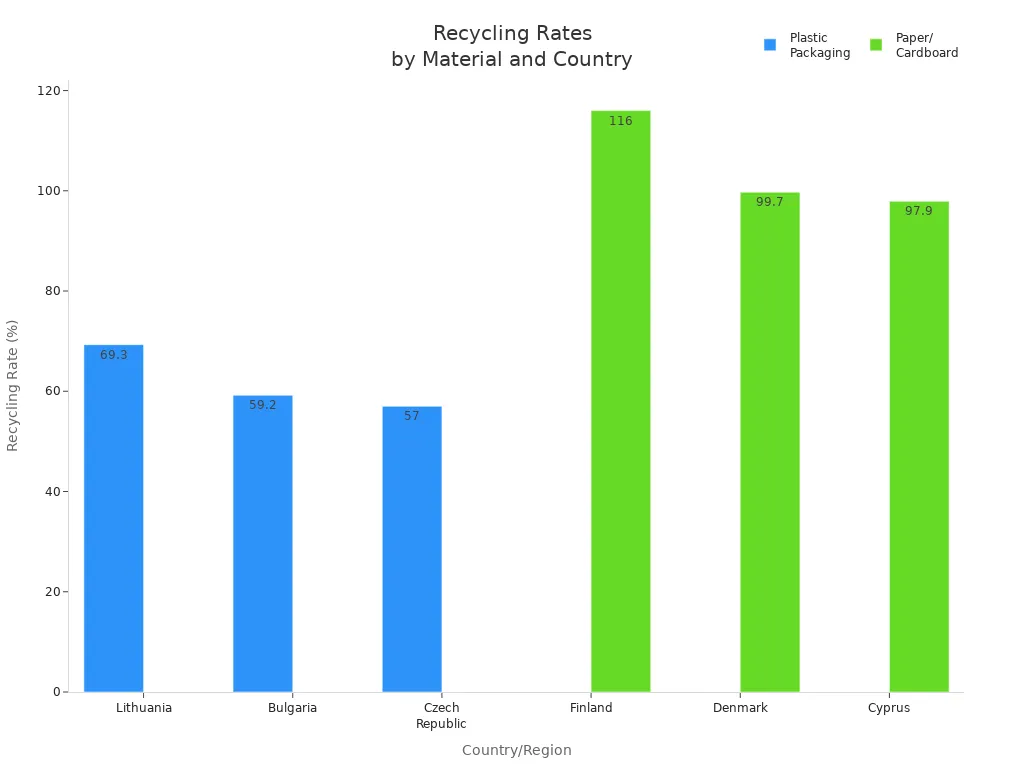
Paper and cardboard recycling rates are much higher than plastic. You help nature by picking packaging that recycles easily.
Plastic packaging causes pollution. Plastics last thousands of years in landfills. They use fossil fuels, which adds carbon emissions. Some plastics release bad chemicals into food or drinks. You see plastic waste in oceans and rivers. You want to avoid packaging that hurts nature.
Plastic is made from fossil fuels.
Single-use plastics make waste and use up resources.
Plastics do not break down, so they pollute the earth.
Some plastics leak chemicals into products.
You care about water and carbon footprints. Paper tubes use recycled and renewable materials. They make fewer greenhouse gases when produced. Using recycled paper lowers emissions by almost 40% compared to new materials. You pick packaging that supports green goals.
Paper tubes have a lower carbon impact than plastic.
You cut emissions by using recycled materials.
Plastic packaging has a higher carbon footprint because it uses petroleum.
You make a good impact by picking sustainable packaging. Hallpack helps you find packaging that protects the planet and fits your brand.
Note: You can help cut pollution and landfill waste by picking packaging made from renewable and biodegradable materials. Sustainable packaging keeps the environment clean and helps the future.
When you pick packaging, you want your products safe. Durability is important for storage and shipping. Packaging should protect from moisture, bumps, and rough handling. Let’s see how push up paper tubes and plastic packaging work.
Push up paper tubes keep out some moisture. Hallpack uses special coatings and seals to block water. You can use them for teas, spices, and snacks. They protect from splashes and damp air. Food-grade paper tubes with moisture barriers give extra safety.
Tip: If your items need extra moisture protection, ask about special coatings or liners for your paper tubes.
You need packaging that survives shipping and handling. Push up paper tubes have a strong round shape. This shape spreads pressure and stops crushing. You can ship rolled items like documents or posters. Kraft paper makes the tubes stronger. Your goods stay safe during transit.
Push up paper tubes protect items while shipping.
The round shape stops crushing and bending.
Kraft paper adds strength and durability.
You can ship rolled items like certificates or posters.
The strong tubes keep products safe from bumps.
Paper tubes give better security than envelopes or boxes. Your items arrive safe, even after rough handling.
Plastic packaging is tough against impacts. You can drop or bump plastic containers. They do not break easily. The material bends and absorbs shocks. Fragile items stay safe inside. You get good protection for cosmetics, electronics, and food.
Plastic packaging absorbs shocks well.
It works for fragile or breakable items.
The material bends but does not crack.
You want packaging that keeps products clean and safe. Plastic makes a tight seal. It blocks moisture and air. You can store liquids, creams, or foods without leaks. Products stay fresh and safe from contamination. Plastic is a trusted choice for many items.
Note: Plastic packaging is popular for strong seals and good protection, but remember to think about your sustainability goals before picking it.
Now you know how push up paper tubes and plastic packaging protect products. Paper tubes are strong and eco-friendly. Plastic packaging gives impact resistance and tight seals. Think about what your product needs and pick the best option for durability and protection.
You want to know how much packaging costs. Price is important when picking paper-based or plastic packaging. Each type has special things that change the final price.
Paper-based packaging costs more at first. You pay extra for raw materials and special ways to make it. Hallpack uses advanced machines for food-grade paper tubes. These machines make sure the tubes are good and always the same. You also pay for certifications like ISO 9001 and FSC. These show your packaging is safe and eco-friendly. Using green materials can cost more than plastic.
Note: You pay more at first for paper-based packaging, but you help the planet and earn trust from customers.
Custom paper packaging makes your brand look special. You can pick colors, shapes, and finishes. Custom designs help your products stand out. You show you care about the environment. Custom paper tubes can be recycled and break down in nature. They attract buyers who care about the earth. Custom designs cost more, but you get benefits over time.
Aspect | Paper Tubes | Plastic Packaging |
|---|---|---|
Upfront Cost | Higher upfront cost | Lower upfront cost |
Long-term Sustainability | Recyclable and biodegradable | Environmental disposal costs |
Brand Reputation | Enhances appeal to eco-conscious consumers | Less favorable perception |
Custom paper tubes can be recycled and break down.
They help your brand look good to people who care about the earth.
Helping the environment can be worth the higher price.
Plastic packaging costs less when made in big amounts. Factories make thousands fast. Plastic is cheap and easy to shape. New machines make production faster and use less work. You save money when you buy a lot. Shipping is cheaper because plastic is light and strong.
Plastic packaging is tough and can be used for many things. You pay less for making lots, but disposal can cost more later. The environment matters more now. Green choices may cost more at first, but help your brand later.
Plastic packaging has a strong supply chain. You can find suppliers everywhere. You get materials fast and cheap. The supply chain helps quick production and delivery. You can order more without waiting. This helps you meet demand and keep prices low.
Tip: If you need fast production and low prices, plastic packaging has a strong supply chain. You can get your products to stores quickly.
You must compare the cost of paper-based and plastic packaging. Paper-based costs more at first, but helps the planet and your brand. Plastic costs less for big orders and fast supply, but disposal and pollution can cost more later.
You want packaging that is easy to hold and use. Push up paper tubes let you get your product out by pushing the bottom. The product moves up to the top. You can use almost all of what is inside. You do not need tools or much strength. The round tube fits nicely in your hand. You can open and close it without any problems.
Many people like how paper tubes feel. The surface is soft and feels natural. You notice this right away. Paper tubes do not slip or feel cold like plastic. Each time you use one, it feels special.
“PaperX tubes help brands look eco-friendly and give a special feel. They show that companies care about the environment and their customers.”
Push up paper tubes let you control how much you use. You can push up a little or a lot. This works well for lip balms, deodorants, and snacks. You do not waste much because you can use almost all of it.
Here is a table with more benefits:
Benefit | Description |
|---|---|
Versatile | Works for many products, even long or odd-shaped ones |
Customizable | You can change size and design for your brand |
Durable | Light but strong, keeps items safe during shipping |
Eco-Friendly | Better for the earth than plastic |
You also have many design choices. You can pick bright colors, cool finishes, or your logo. This helps your product stand out in stores. Many brands use paper tubes to look modern and show they care about the planet.
Cost-effective: You spend less money on packaging than some other types.
Highly customizable: You can pick bright colors and cool designs.
Plastic packaging is quick and easy to use. You can open and close it many times. It is light, so you can take it anywhere. You do not worry about leaks or spills. Plastic keeps food, makeup, and medicine safe and fresh.
Plastic works well for busy people. If the plastic is clear, you can see what is inside. You do not have to open it to check. This saves you time and effort.
You see plastic packaging everywhere. It is in stores, homes, and schools. The design feels normal and safe. You trust plastic to keep your things safe.
Here is a table with the main plastic packaging benefits:
Advantage | Description |
|---|---|
Exceptional Durability | Plastic stands up to water, pressure, and bumps very well. |
Lightweight and Cost-efficient | It is light, so shipping costs less, and making lots is cheap. |
Long Shelf Life | It keeps food, makeup, and medicine fresh for a long time. |
Premium Transparency | Clear plastic looks shiny and fancy, good for special items. |
You get strong protection and products last longer. Plastic packaging keeps things safe when shipping or storing. You also get a clear, shiny look for special products.
Tip: If you want packaging that is easy, familiar, and keeps things fresh, plastic packaging is a good choice.
Many companies want to use less plastic. They look for new packaging materials. These choices help the planet and follow new waste rules. You can pick from several popular options:
Bioplastics: They look and feel like plastic. They come from plants. Some people wonder if they are really green.
Bamboo: Bamboo grows back fast. It works well for packaging. Sometimes there is not enough supply.
Metals: You see metals in cans and tubes. They recycle easily. They last a long time.
Sugarcane packaging: This uses bagasse. It is renewable and breaks down in nature.
Hemp packaging: Hemp grows quickly. It needs little water. It makes strong, earth-friendly packaging.
Paper and paperboard: New coatings help these work for more products. You see them used more each year.
You can choose the best option for your brand. Think about your product and your customers.
You want packaging that fits your brand. You also want it to keep food safe. Hallpack's food-grade paper tubes give you many choices. You can pick the size, color, and finish. You can add your logo or special designs. These tubes use soy ink and biodegradable film. They look good and help the environment.
You want to know your packaging is safe. Hallpack's food-grade paper tubes have important certifications:
Certification/Standard | Description |
|---|---|
FDA Certification | Makes sure materials do not have harmful chemicals. |
EU Food Contact Materials Regulation | Follows EC No. 1935/2004 for safety. |
ISO Standards | ISO 22000 shows food-safe manufacturing practices. |
BPA-Free Coatings | Inner linings lower exposure to harmful chemicals. |
You can trust these tubes for snacks, teas, and spices. They keep your food fresh and safe.
Food-grade paper tubes are used in many industries. Food companies use them for snacks, coffee, and tea. Cosmetic brands use them for creams and balms. Gift companies pick them for special packaging. These alternatives keep products dry and safe. You can use them for mailing, too. The strong design protects items during shipping.
Eco-friendly packaging helps your brand stand out. Customers notice when you pick alternatives that help the planet.
You want a package that works well. You also want it to feel good to use. The round paper push up deodorant stick gives you a smooth, easy way to use deodorant. It has a special dial mechanism. You can control how much you use. You do not need a plastic base. The round shape fits your hand. It looks modern.
This design gives you a better user experience. The product moves up smoothly. You can use almost all of it. The round paper push up deodorant stick stands out on the shelf. It shows your brand cares about the environment.
You care about the earth. The round paper push up deodorant stick uses recycled paper. It cuts down on plastic waste. You help reduce pollution by picking this alternative. The stick breaks down in nature. It does not add to landfill problems.
More brands are switching to alternatives like this. You can join them. You show your customers you care about the planet. The round paper push up deodorant stick is a smart choice for you and the environment.
You see many benefits when you choose paper tubes for packaging. Paper tubes help your brand stand out as eco-friendly. They break down in nature, so you do not add to landfill waste. You can recycle them or compost them. This makes them a smart choice for companies that care about the planet.
You can customize paper tubes in many ways. You pick the size, shape, and design that fits your product. You add your logo or special colors. This helps your packaging match your brand and attract buyers.
Paper tubes weigh less than many other types of packaging. You save money on shipping because lighter packages cost less to move. You also help lower your carbon footprint.
Many shoppers like brands that use sustainable packaging. You show you care about the environment. This builds trust and loyalty with your customers.
Here is a table that shows the main advantages of paper tubes:
Advantage | Description |
|---|---|
Eco-Friendly | Biodegradable, recyclable, and compostable. |
Customizable | Supports various sizes, shapes, and designs. |
Lightweight | Reduces shipping costs. |
Consumer Appeal | Aligns with sustainability trends and enhances brand image. |
Tip: You can use paper tubes to show your brand cares about the earth. This helps you connect with buyers who want green products.
You may face some challenges when you use paper tubes. Paper tubes do not resist moisture as well as plastic. You need special coatings or liners for products that must stay dry. You may pay more for these features.
Paper tubes can be less strong than plastic. They may bend or crush if handled roughly. You must choose thicker materials or extra protection for fragile items.
You may pay more for paper tubes at first. Custom designs and eco-friendly materials cost more than standard plastic packaging. You need to balance your budget with your brand goals.
Note: You can ask your supplier about ways to make paper tubes stronger and more moisture-resistant. This helps you protect your products and keep your customers happy.
Plastic packaging gives you strong protection for your products. You can use plastic for items that need to stay dry or safe from bumps. Plastic resists water and keeps out air. You can store food, cosmetics, and medicines without worry.
Plastic is light and easy to shape. You can make many designs and sizes. You can see through clear plastic to check what is inside. This helps you and your customers.
You pay less for plastic packaging when you order in large amounts. Factories make plastic quickly and cheaply. You get your products to stores fast.
Plastic packaging is familiar to most people. You know how to use it. You trust it to keep your items safe.
Tip: You can use plastic packaging for products that need strong seals and impact resistance. This helps you protect your goods during shipping and storage.
Plastic packaging has many problems. These problems can hurt your brand, your customers, and the earth. Here are the main cons you need to know:
Environmental Pollution
Plastic packaging makes a lot of trash. Most plastic does not break down in nature. It can stay in landfills for hundreds or thousands of years. You see plastic bags and bottles in rivers, oceans, and parks. Animals can eat plastic by mistake. This can hurt or kill them. Using plastic adds to pollution.
Low Biodegradability
Plastic does not rot like paper or food. It stays in the environment for a long time. Even when plastic breaks into tiny pieces, called microplastics, it does not go away. These small pieces can get into water, soil, and even your food.
Recycling Challenges
You may think recycling helps with plastic waste. But only a small part of plastic packaging gets recycled. Many types of plastic cannot go in recycling bins. They have different chemicals or layers. Some recycling centers do not take certain plastics. Most plastic ends up as trash.
Note: Studies show less than 10% of all plastic ever made has been recycled. The rest is still in landfills or the environment.
Resource Use
Plastic comes from oil and gas. These are non-renewable resources. Making plastic uses lots of energy and water. This process makes greenhouse gases. These gases add to climate change. Using plastic uses up resources that cannot grow back.
Health Concerns
Some plastics can leak chemicals into food or drinks. These chemicals may harm your health over time. You may have heard about BPA or phthalates. These are chemicals found in some plastic packaging. Many people now want packaging without these chemicals.
Negative Brand Image
More shoppers want eco-friendly products. If you use plastic packaging, some customers may see your brand as less green. This can hurt your reputation. You may lose buyers who care about the planet.
Here is a table that shows the main cons of plastic packaging:
Disadvantage | Why It Matters |
|---|---|
Pollution | Adds waste to land and water |
Not Biodegradable | Stays in the environment for a long time |
Hard to Recycle | Most plastic does not get recycled |
Uses Fossil Fuels | Uses up oil and gas, adds to climate change |
Health Risks | May leak harmful chemicals into food or drinks |
Bad for Brand Image | Can make your brand look less eco-friendly |
You should think about these problems before picking plastic packaging. By knowing the cons, you can make better choices for your products and your brand.
When you choose between push up paper tubes and plastic packaging, you need to think about what matters most to you and your brand. The right choice depends on your product, your values, and what your customers expect. You want your packaging to protect your product, look good, and match your brand’s message. You also want to meet new rules and trends in the market.
Start by looking at your product. Some products need strong protection from water or bumps. Others need to stay fresh for a long time. If you sell food, snacks, or teas, you want packaging that keeps them safe and fresh. Push up paper tubes work well for dry goods, snacks, and solid items. They give a natural look and feel. If you sell creams, liquids, or items that need a tight seal, plastic packaging might work better. Plastic keeps out air and water. It protects fragile items during shipping.
Think about the size and shape of your product. Paper tubes fit many shapes and sizes. You can use them for lip balms, deodorants, or rolled posters. Plastic packaging comes in many forms too. You can find bottles, jars, and wrappers for almost any product.
Your brand values guide your choices. Many shoppers care about the environment. They want brands to use less plastic and more eco-friendly packaging. If your brand stands for sustainability, you should pick packaging that matches this value. Push up paper tubes show you care about the planet. They use renewable materials and break down in nature. You can print your logo and message on them to show your commitment to sustainability.
If your brand focuses on convenience or long shelf life, plastic packaging may fit your needs. Plastic is familiar to most people. It gives strong protection and keeps products fresh. You can also recycle some types of plastic, but not all.
You should also think about what your customers want. Many people now look for sustainable packaging. They want to buy from brands that help the planet. You can build trust and loyalty by choosing packaging that matches these values.
Tip: When you choose packaging, ask yourself, “Does this show what my brand stands for?” Your packaging is the first thing customers see. Make it count.
You can use this checklist to help you decide which packaging works best for your needs:
Question | Push Up Paper Tubes | Plastic Packaging |
|---|---|---|
Does my product need to stay dry or airtight? | Needs special coating | Yes, strong seal |
Do I want eco-friendly materials? | Yes, renewable and green | Not always |
Is my product fragile or liquid? | Not ideal for liquids | Yes, good for liquids |
Do I want to show my brand’s sustainability? | Yes, clear message | Harder to show |
Do I need custom shapes or designs? | Yes, highly customizable | Yes, many options |
Is cost a big concern for my business? | Higher upfront cost | Lower upfront cost |
Do my customers care about the environment? | Yes, matches their values | May not match |
Do I need fast production and delivery? | Takes more time | Faster, strong supply chain |
You can check each box that matches your needs. This helps you see which packaging fits your product and your brand.
You should also look at the bigger picture. Many businesses now focus on sustainability. They want to lower their impact on the planet. You can join this movement by choosing packaging that uses renewable resources and breaks down in nature. Hallpack helps you find the best solution for your brand. With over 20 years of experience, Hallpack offers high-quality, sustainable packaging options. You can trust Hallpack to guide you through the process and help you make the right choice.
Note: The world is changing. More people care about sustainability and want brands to do the same. Your packaging choice can help you stand out and build a loyal customer base.
You have learned the main pros and cons of push up paper tubes and plastic packaging. If you want eco-friendly packaging for deodorant, you can choose paper tubes. You can also use plastic for deodorant if you need strong protection. You should think about what matters most for your deodorant. You can look at cost, durability, and how your deodorant will be used. You can pick the best packaging for your deodorant by thinking about your brand values. You can trust Hallpack to help you find the right deodorant packaging. You can upgrade your deodorant packaging with Hallpack.
You help the earth when you pick push up paper tubes. These tubes use materials that can grow back. They break down in nature. You support products that are good for the planet and cut down on plastic waste. This choice helps make cosmetic manufacturing better for the environment.
Paper-based alternatives are easier to recycle than plastic. Most recycling centers take them. Plastic often becomes single-use waste. You help the environment by picking products that recycle easily.
Many push up deodorant tubes can go in compost piles. They use plant-based materials. These tubes break down in compost. You lower waste and help the planet. Always check if your tube is certified compostable.
You avoid single-use plastic to keep the earth safe. Single-use plastic makes waste that lasts a long time. It hurts animals and pollutes water. You help by picking packaging that is better for the planet.
Eco-friendly packaging helps the earth. You cut down on plastic waste and support green practices. You show customers you care about nature. Eco-friendly packaging also makes your brand stand out.
Plastic packaging is everywhere. It makes waste that stays for years. Single-use plastic fills landfills and oceans. Plastic does not break down. You help the earth by using less plastic and picking green products.
You can use eco-friendly packaging for food and cosmetics. Many companies use paper-based and plastic alternatives. These choices keep products safe and fresh. You help make cosmetic manufacturing better for the planet.
Look at what your product needs. If you want less waste and to help the earth, pick eco-friendly packaging. If you need strong moisture protection, plastic may be better. You help the planet by picking green products.